Why You Should Reread Books: The Real Benefits
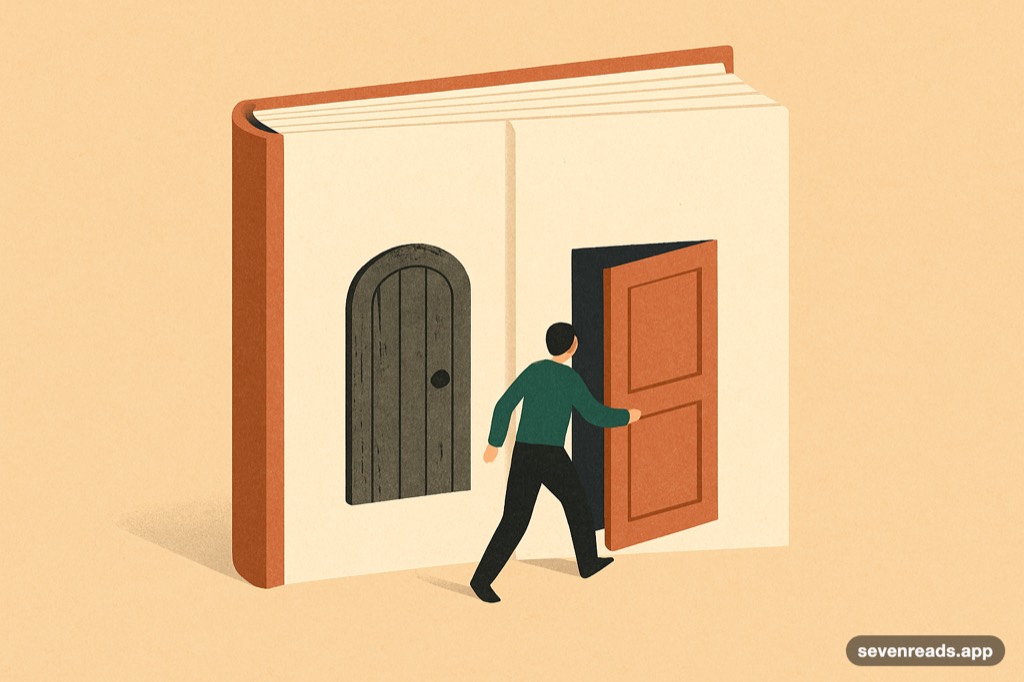
Rereading gets treated as reading's guilty pleasure — time that could have gone to something new — and the accounting is backwards: second passes reliably yield different and often better books than first ones, because first readings are spent largely on orientation (who, what, where) that returns entirely as attention to be spent on everything orientation crowded out. The book hasn't changed; your bandwidth has. And on longer intervals, you haven't stayed the same either — which turns rereading into the only reliable instrument for measuring your own change.
Here's the case, the mechanics, and how to reread well.
Your old highlights and questions wait in Seven Reads — rereading with your past self's notes.
Get Seven ReadsWhat the second pass actually reads
First readings are navigation-heavy: tracking characters, holding plot, parsing style — working memory fully booked with the book's surface. Freed of suspense and orientation, the second pass reads structure: setups visible as setups, themes surfacing early, craft in plain sight (the mystery's fair clues, the courtship hidden in dialogue, the image planted in chapter one that detonates in twenty). Dense books effectively require this — nobody reads the great difficult novels once; the first pass buys the map the real reading uses. That's not a flaw in first readings; it's why "worth rereading" and "great book" have always been near-synonyms.
The mirror effect
On intervals of years, the instrument reverses: the fixed text measures the changed reader. Characters re-sort themselves (the romantic lead dims; the overlooked parent becomes the book's center), passages that once seemed decorative become load-bearing, and marginalia from your earlier self reads like correspondence from someone you knew. This is rereading's unique data: nothing else offers a controlled comparison of you-then versus you-now, because everything else changed too. Readers who keep annotations from earlier passes get the effect sharpened — the exact sentences that struck you, timestamped, against the ones striking you now.
Which books repay returns
Density predicts it: books running multiple layers (structure under story, argument under narrative) repay because one pass can't hold them all. Age-sensitivity predicts it: books about marriage, ambition, parents and time read differently from different decades of a life — the classics' persistence is partly this, the same titles restocking themselves per decade. And personal resonance predicts it best: the books you keep thinking about are applying for the reread. What doesn't repay: plot-only books whose single pleasure was suspense — once spent, spent.
Rereading well
Three upgrades over mere repetition. Bring your old notes — the conversation with your past reading is half the value. Change the question — first pass asked "what happens?"; assign the second one deliberately ("how does she do it?", "what did I miss about the father?"). And space the returns — the mirror needs distance; a great book every five-ish years outperforms immediate repetition for everything except study. Rereading counts fully against any honest reading goal: the number was never the point — the books that become part of you were, and rereading is how they do it.
Frequently asked questions
Is rereading books a waste of reading time?
The opposite for dense or personally resonant books: second passes read structure and depth that first-pass orientation crowded out, and long-interval rereads measure your own change against a fixed text. Plot-only books are the exception — suspense spends once.
How long should I wait before rereading a book?
For craft and depth, anytime after the plot fades — a year or two. For the mirror effect, longer is better: five-plus years lets the reader change enough for the same pages to answer differently.
Do rereads count toward a reading goal?
Fully — the goal worth having is books that stay with you, and rereading is the mechanism by which books do. Any accounting that penalizes returns is optimizing the wrong number.
Go back changed.
Seven Reads keeps every highlight and question from your first pass — reread with your past self in the margins and a companion for what you find.
Get Seven Reads