How to Annotate Books (Without Ruining Them)
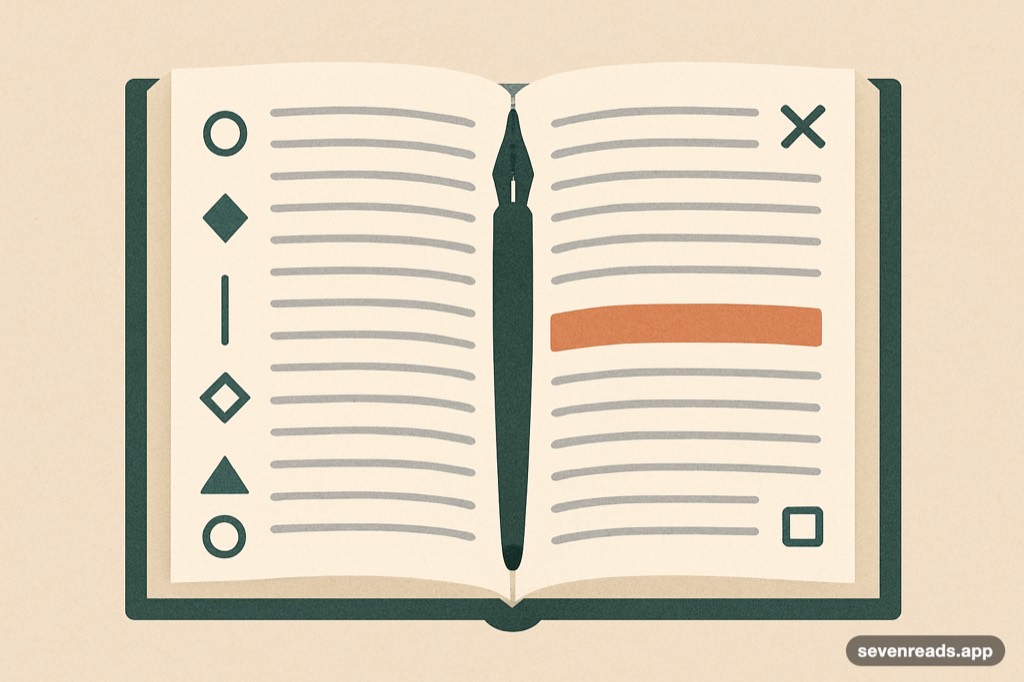
Good annotation is a conversation with the book, kept short enough to sustain: mark what strikes you cheaply as you read, and attach actual words — a reaction, an objection, a connection — at natural pauses. The two failure modes are opposites: marking everything (a fully yellow page records nothing) and composing essays mid-chapter (which kills the reading the notes were meant to serve). The working system lives between them, and it's small.
Here's what to mark, what to write, and how digital changes the physical-book anxieties.
In Seven Reads, highlights and notes live on the page and stay private — no pencil required.
Get Seven ReadsWhat to mark: three categories, cheaply
Restraint beats coverage. The marks that stay useful fall into three kinds: struck you — passages that landed, for reasons you may not yet know (a plain underline or highlight); disagree — claims you resisted (a mark plus the shortest possible why); load-bearing — the sentences the argument actually stands on, usually two or three per chapter. A page with one meaningful mark outperforms a page painted yellow, because the mark still means something on return. If everything qualifies, nothing does — the discipline is the value.
What to write: reactions, not transcriptions
The note that ages well records your half of the conversation: "this contradicts ch. 2," "test against my team," "no — survivorship bias?" Notes that merely restate the text add nothing the highlight didn't. The practical trick is the two-moment structure: mark now, write at the pause — end of chapter or session — when the thought has had time to become yours. That's also why marking and noting are separate steps in any durable retention system: the mark is capture, the note is processing, and doing both at once does each badly.
A symbol vocabulary, if you want one
Margin shorthand keeps the pen from slowing the eye. A workable starter set: a line for notable, a question mark for don't understand yet, an exclamation for strong agreement or surprise, an X for dispute this, a circled C for connects to something (name it at the pause). Five symbols cover ninety percent of reading reactions; invent the rest as needed. The point isn't the system — it's that a stable vocabulary makes your past marks legible to your future self, which is the entire return on annotation.
The ruining-the-book problem, dissolved
Half of annotation advice is really anxiety management about pencil versus pen, sticky notes, and the ethics of writing in books at all. Digital reading dissolves the whole genre: highlights don't bleed, notes attach to the exact passage without squeezing into margins, everything is searchable later, and the book remains pristine — including library books and borrowed copies. The deeper digital advantage is retrieval: marginalia in a closed book is buried; digital annotations can be reviewed as a set, which converts them from souvenirs into material for the post-book synthesis. Annotate for the return visit; digital makes the return visit actually happen.
Frequently asked questions
What should I annotate in a book?
Three things: passages that strike you, claims you dispute (with the shortest why), and the few load-bearing sentences per chapter. Marking less means each mark means more on return.
Should annotations be written while reading or after?
Split the work: mark cheaply in the moment, write the actual note at chapter or session end. Momentum survives, and notes written at the pause are processed thoughts rather than transcription.
Is digital annotation better than writing in physical books?
For retrieval, decisively: digital highlights and notes are searchable, reviewable as a set, and private — and the book stays pristine. Physical margins win only on the tactile pleasure, which is real but doesn't compound.
Annotate without the anxiety.
Seven Reads keeps highlights and notes on the passage, private, searchable — and turns them into a synthesis when you finish the book.
Get Seven Reads