Emma AI: a reading companion that never spoils it
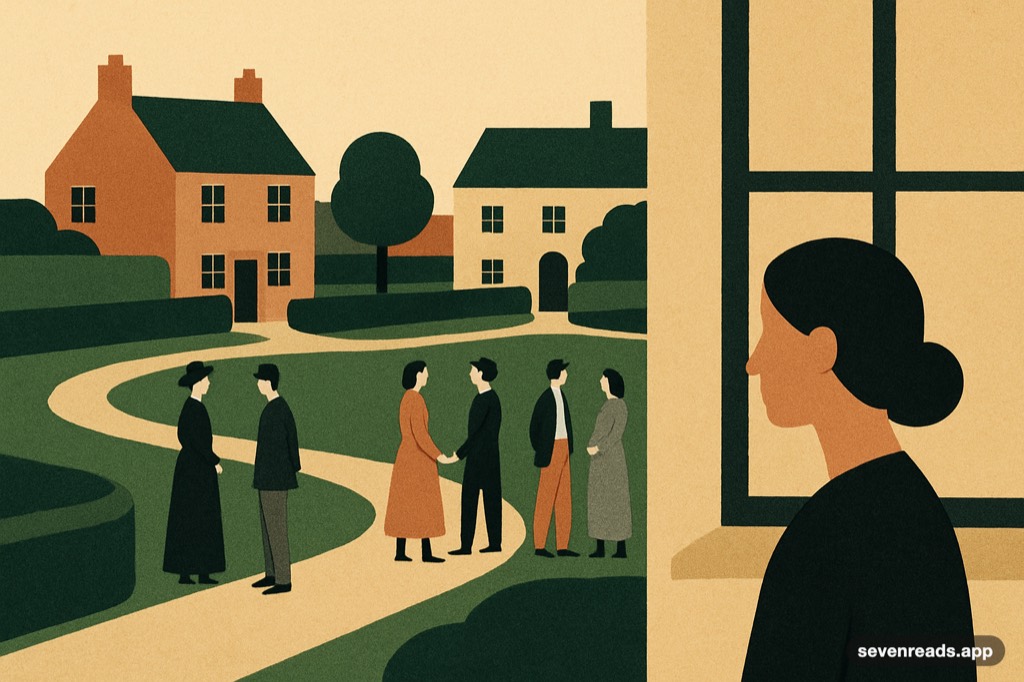
Reading Emma with an AI companion means you can ask questions about the book — by typing or by voice — and get answers grounded in the pages you've actually read, never the ones ahead. Austen built it as a fair-play puzzle: nearly every conversation contains a signal Emma misreads, and the book quietly logs the evidence. It rewards the reader who stops to ask what a scene looked like from the other side.
Emma is free in Seven Reads — start reading today.
Get Seven ReadsWhat readers actually ask about Emma
These are the kinds of questions a companion earns its keep on — asked mid-page, answered from the text you've read, without judgment and without leaks:
“Am I supposed to like Emma?”
Austen famously predicted readers wouldn't — and wrote her anyway. The book works best when you hold both judgments at once: Emma is generous and clever, and she's also wrong about nearly everything. A companion can point at what the text shows versus what Emma concludes, scene by scene.
“Did I just miss a clue?”
Probably — a hesitation, a gift with no clear giver, a conversation that lands slightly off. This is the ideal book for asking "was there anything odd in that scene?" at chapter ends: a position-aware companion can flag what's visible so far without touching what it means later.
“Why does the book linger on such small events?”
Because the smallness is the canvas: a picnic, a ball and a word game carry the novel's real dramas of status, cruelty and self-knowledge. When a scene feels trivial, ask what's actually at stake in it — the answer is usually sharper than the surface.
The spoiler problem with Emma
The novel hides several courtships in plain sight, planting clues Emma herself misses; scholars have called it the first great detective story without a detective. Learn who ends up with whom in advance and you lose the exact experience the book was engineered to give you: being fooled alongside its heroine. A general chatbot has read the whole book and will eventually let that knowledge shape an answer. Seven Reads' companion is position-aware: it retrieves only from text before your bookmark, so it cannot reveal what you haven't reached — ask about the ending early and it declines, and tells you where you are instead.
How to read Emma with Seven Reads
Add the book from the built-in store — it's one of 50,000+ public-domain classics included free — and just start reading. Highlight what strikes you, add notes when the thought arrives, and ask the companion anything the moment you wonder. When you finish, Seven writes two things: the book's overview, and a synthesis of what you noticed, built from your own notes and questions. If it's your first classic in a while, our guide to starting the classics pairs well with this book.
Frequently asked questions
Can I read Emma for free?
Yes. Emma is in the public domain, and a well-formatted copy is included free in Seven Reads — one tap adds it to your library, where it reads like any other book, with your position, highlights and notes kept.
Can AI discuss Emma without spoiling it?
Only if the AI is position-aware. Seven Reads tracks exactly where you are in Emma and answers only from the pages behind your bookmark — everything ahead is structurally excluded, so asking about the ending gets a refusal, not a leak. Emma is essentially a mystery novel wearing a comedy of manners — the clue structure is the point.
How long does it take to read Emma?
Around 11 hours for most readers. At twenty minutes a day, that's roughly 5 weeks — and a streak matters more than any single sitting.
More classics to read with AI
- All 77 classics you can read with AI — the full list
- Pride and Prejudice AI — Jane Austen
- Persuasion AI — Jane Austen
- Sense and Sensibility AI — Jane Austen
- How the no-spoilers guarantee works