How to Start Reading the Classics (Without Getting Lost)
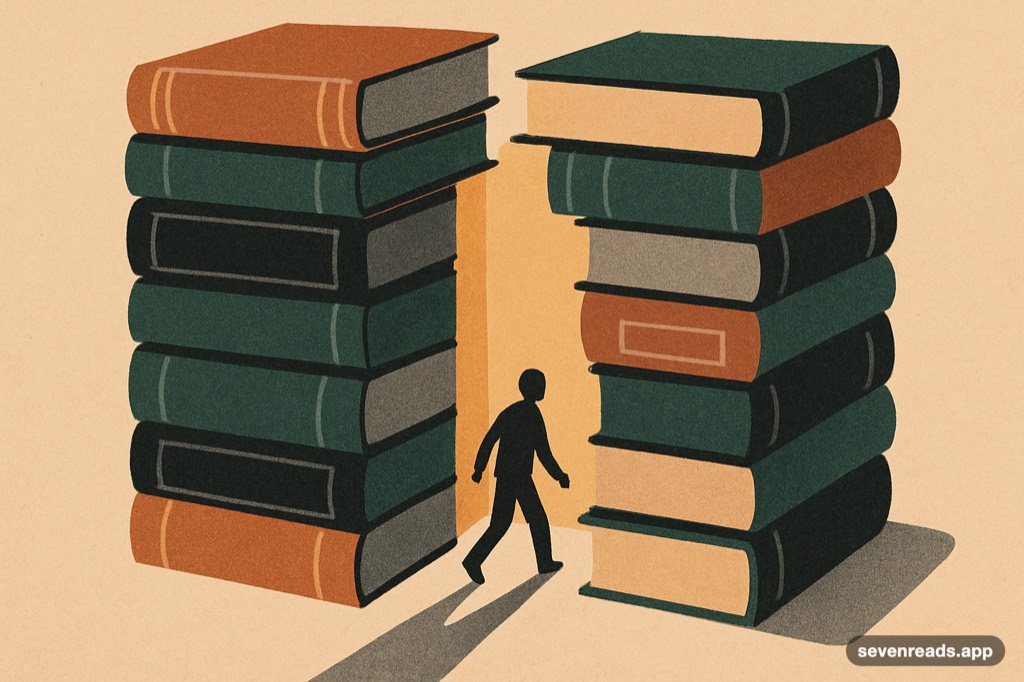
The classics have a marketing problem. They're the best-tested books in existence — every one of them has survived generations of readers who had every opportunity to forget it — and they're free, because copyright has long expired on all of them. Yet most people's relationship with the classics is a vague guilt: the sense that they should read them, formed in a classroom, followed by twenty years of not doing so.
The guilt is misplaced, and so is the fear. Here is a practical way in.
Start with a book you already want to argue with
The single biggest mistake is choosing a classic by prestige rather than pull. Don't start with the longest Russian novel because it's impressive; start with the book whose question you already carry. Anxious about how to live? That's Marcus Aurelius. Suspicious of politics? Plato and Machiavelli have been waiting for you. Wondering whether people can really change? Austen has views. A classic read out of genuine curiosity is easier than a thriller read out of obligation.
Five first books, and why
- Meditations, Marcus Aurelius. The Roman emperor's private notebook — short entries, no plot, no prerequisites. You can open it anywhere. It is the easiest great book to start and the hardest to finish unchanged.
- The Odyssey, Homer. An adventure story before it is anything else: monsters, shipwrecks, disguises, revenge. Nearly three thousand years of readers can't be wrong about whether it's entertaining.
- Pride and Prejudice, Jane Austen. The prose is genuinely funny, the plot machinery still powers half of modern romance, and it needs no historical footnotes to land.
- Tao Te Ching, Laozi. Eighty-one short chapters you can read in an evening and then think about for a year. The ideal classic for someone with little time and real questions.
- Dracula, Bram Stoker. Proof that "classic" doesn't mean "homework." Told in letters and diary entries, it's a page-turner with a body count.
What to do when you're confused
You will be confused. This is not a sign that the book is beyond you — it's what reading across a gap of centuries feels like. Names pile up, references assume a world you don't live in, and an argument sometimes turns on a distinction that mattered enormously in 380 BC and needs a moment's unpacking now.
The old solutions were footnotes, companion guides, or pretending. The better solution is to ask your question at the moment you have it, about the page you're actually on. That's the reading habit we built Seven Reads around: select the passage, ask what's going on — by typing or by voice — and get an answer grounded in the pages you've read, with nothing from ahead of your position. Confusion resolved in thirty seconds keeps you in the book; confusion carried for thirty pages ends with the book back on the shelf.
The classics don't require a teacher. They require permission to ask basic questions without embarrassment — which is easier to grant yourself when the thing you're asking can't judge you.
Read slowly on purpose
A classic is dense the way a poem is dense: the sentences are doing more work per word than modern prose, and speed-reading them wastes exactly what makes them worth reading. Twenty minutes a day is a perfectly serious pace. At that pace, Meditations takes about a week and a half — and a streak of days matters far more than the size of any one sitting, which is why Seven Reads tracks your reading time honestly and keeps a weekly view of it, like a training log.
Keep what the book gives you
Finally: a classic read once and unmarked mostly evaporates, the same as any book. Highlight what strikes you, write the thought when it arrives, and when you finish, spend ten minutes recording what you took from it. We wrote a full guide to that system in How to Remember What You Read.
Every book on this page is in Seven Reads — with 50,000+ more classics, free inside the app, and an AI companion to field the basic questions.
Get Seven Reads