Irony Meaning: The Three Kinds, Finally Sorted
Irony is a meaningful gap — between what is said and what is meant, or between what is expected and what happens, or between what a character knows and what the audience knows. Those are the three real kinds (verbal, situational, dramatic), and most confusion about the word — including the decades-long argument over that Alanis Morissette song — comes from mixing them. The word descends from a stock character in Greek comedy: the eirōn, the understater who plays dumb and wins.
Here's each kind with its classic demonstration, the Socratic original, and the honest rule for "is this ironic?"
The masters of irony are free in Seven Reads — start reading today.
Get Seven ReadsVerbal irony: saying it wrong on purpose
Verbal irony states something other than — usually opposite to — what's meant, trusting the audience to hear the reversal: "Lovely weather," in the downpour. Its masterpiece opening belongs to Austen: "It is a truth universally acknowledged, that a single man in possession of a good fortune, must be in want of a wife" — a sentence whose every word means less than it says and implies more, announcing 400 pages where politeness is a blade. Sarcasm is verbal irony's blunt cousin: same reversal, aimed at a person, with the contempt showing. All sarcasm is verbal irony; most verbal irony is subtler than sarcasm.
Dramatic irony: the audience knows
Dramatic irony is a knowledge gap the audience holds over the characters — we know the beloved is only sleeping; Romeo doesn't. The Greek tragedians built whole plays on it: Oedipus vows to find the polluter of Thebes while every spectator knows the search ends in a mirror — his confident speeches mean one thing to him and another, terrible thing to us. It's the engine of suspense (we know the bomb is under the table) and of tragedy (the hero's error is visible to everyone but him), and it's why spoilers change stories: they convert surprise into dramatic irony, which is a different experience, not a ruined one — unless the story was built for the surprise.
Situational irony: the event answers back
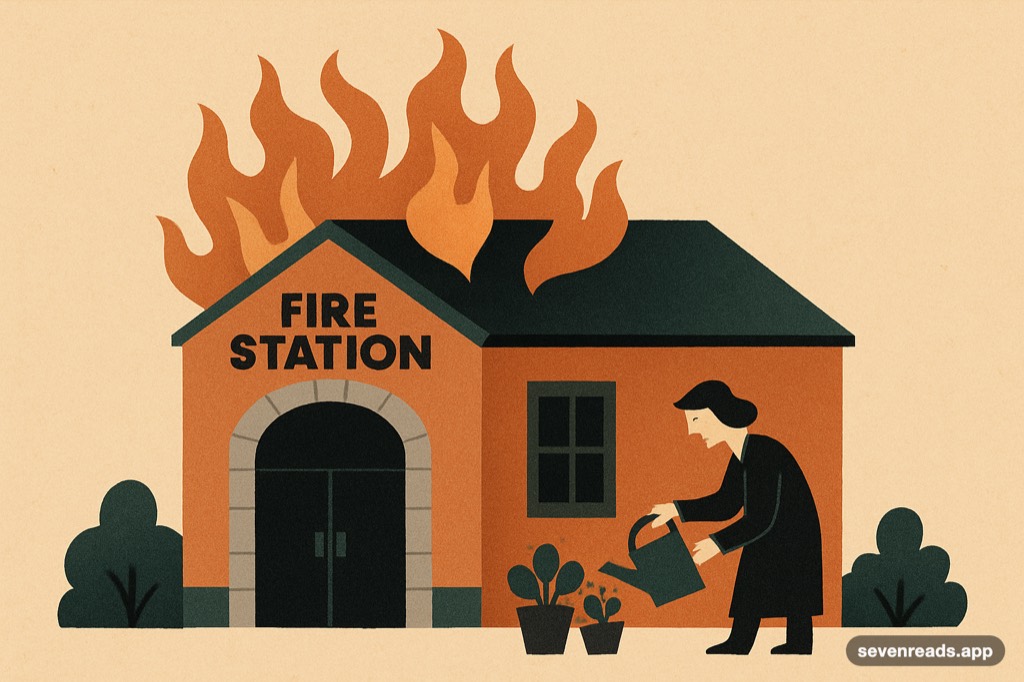
Situational irony is a gap between expectation and outcome with meaning in the gap: the fire station burns down; the lifeguard drowns; the gift ends the war by ending the city. The "with meaning" clause is the whole test, and the answer to every "is this ironic or just unlucky?" argument. Rain on your wedding day: bad luck. Rain on the wedding of a meteorologist who moved the date to dodge rain: irony — the outcome mocks the expectation through the very effort to secure it. Bad luck is random; irony has aim.
The Socratic original
Before the figures of speech, irony was a life strategy. Socrates perfected the eirōn's move — professing ignorance ("I know only that I know nothing") while dismantling every expert in Athens — and "Socratic irony" still names the teacher's feint of not-knowing that lets students walk into the truth. Watch it live in the Symposium, where he demolishes the room while apologizing for his simplicity. The Greek comedy character won by understatement; Socrates turned the bit into philosophy; Austen turned it into the novel. The gap, it turns out, is where intelligence lives.
Frequently asked questions
What are the three types of irony?
Verbal (saying other than what's meant — Austen's famous first line), dramatic (the audience knows what characters don't — Oedipus), and situational (the outcome mocks the expectation — the fire station burns down).
What is the difference between irony and sarcasm?
Sarcasm is verbal irony aimed at a person with the contempt showing — "nice job" after a failure. All sarcasm is irony; most irony is subtler and often not hostile at all.
Is rain on your wedding day ironic?
By itself, no — that's bad luck. It becomes situational irony only when the outcome mocks the expectation through some meaningful connection: a meteorologist who moved the date to avoid rain, rained on, is irony.
Mind the gap — it's the good part.
Austen, Sophocles and Socrates are free in Seven Reads — start reading today.
Get Seven Reads