Satire Meaning: Comedy With a Target
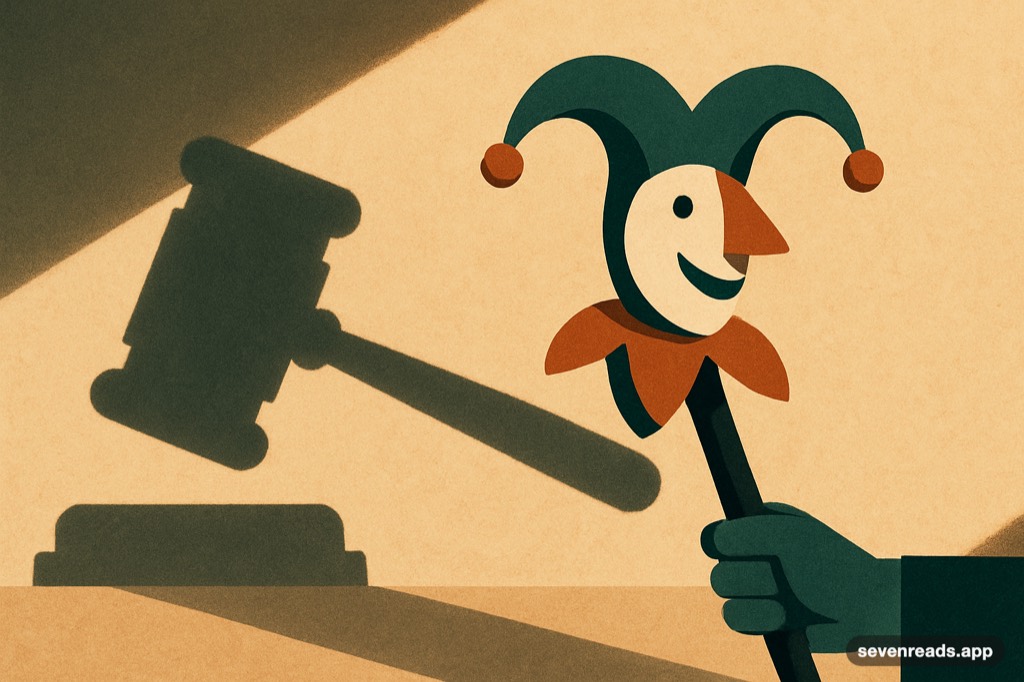
Satire is comedy with a target and a verdict: humor, irony and exaggeration deployed to expose folly or vice — usually with at least a flicker of hope that exposure changes something. It differs from mere mockery by its claim to a standard (something is being measured and failed) and from comedy generally by its aim (laughter as instrument, not destination). The etymology is a famous surprise: not from Greek satyrs but Latin satura — a "full plate," a medley — satire as the heaped dish of everything the writer needed to say.
Here's the form's two classic temperatures, its greatest weapons, and the reader's field guide.
The satire classics are free in Seven Reads — start reading today.
Get Seven ReadsTwo temperatures: Horatian and Juvenalian
The Roman satirists set the poles criticism still uses. Horatian satire — after Horace — is warm: the satirist laughs at folly from inside the human club, correcting with a smile ("what forbids us to tell the truth, laughing?"). Juvenalian satire — after Juvenal — is savage: contempt, indignation, the whip ("it is difficult not to write satire"). The distinction is diagnostic gold: Austen is Horatian (her fools are beloved), Swift is Juvenalian (his targets are indicted), and most satirical works declare their temperature in the first pages. Knowing which club is swinging tells you how to duck.
The nuclear device: sustained irony
Satire's most powerful weapon is the strategy of saying the opposite and meaning it harder — at essay length. Swift's "A Modest Proposal" (1729) is the form's Everest: a reasonable, statistical, warm-hearted case for eating Irish babies, sustained without a wink for its entire length, so that the reader's mounting horror is the argument about English policy. His Gulliver's Travels runs the gentler version — Lilliput's heel-heights and egg-wars as European politics at doll scale. The technique's risk is Poe's law before the internet named it: satire without a visible wink will be taken straight by someone, and the straighter the face, the better the satire and the bigger the misfire.
The other armory
Exaggeration to scale (Rabelais's giants, hyperbole with a warrant); the naive traveler whose innocent questions demolish (Candide asking, after each atrocity, whether this is really the best of all possible worlds — Voltaire's whole engine); the beast fable (Animal Farm making the pigs legible as no pamphlet could); the mock-heroic (Pope's Rape of the Lock lavishing epic machinery on a stolen curl, deflating both society and epic at once). Common to all: a standard the reader is trusted to hold. Satire is the most collaborative of forms — it fails completely with a reader who won't supply the measuring stick.
Reading it now
Old satire ships without its context, so the reader's job is recovering the target — which our companion-style reading handles well: ask what a Lilliputian ritual is standing in for and the joke reassembles. And the form's standing test still applies to everything on your feed: real satire punches at power, folly and vice; mockery that punches only down or sideways is wearing satire's jacket without its license. The full plate has a spine.
Frequently asked questions
What does satire mean in simple terms?
Comedy with a target: humor, irony and exaggeration used to expose folly or vice against some standard — laughter as an instrument of judgment, usually with hope of correction.
What is the difference between Horatian and Juvenalian satire?
Temperature: Horatian satire corrects with a warm laugh from inside the human club (Austen); Juvenalian satire indicts with contempt and indignation (Swift). Most satires declare their mode early.
Is satire named after satyrs?
No — that's the famous false etymology. It's from Latin satura, a "full plate" or medley: the heaped dish of everything the writer needed to say.
The full plate, served.
Swift, Voltaire and Austen are free in Seven Reads — start reading today.
Get Seven Reads