What Is the Socratic Method?
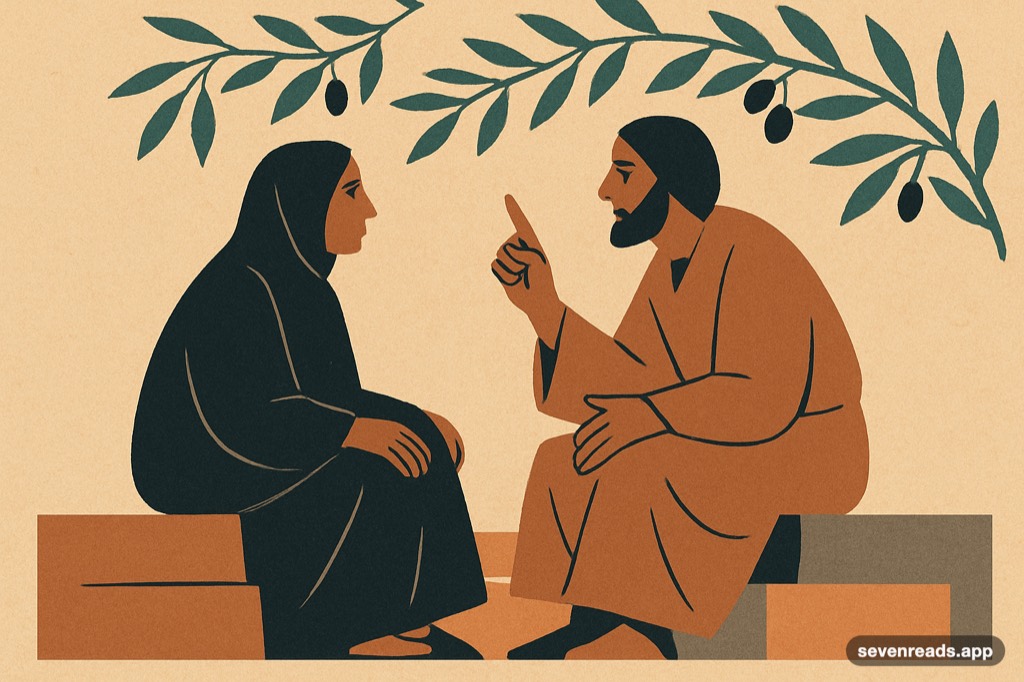
The Socratic method is teaching and testing by questions rather than assertions: Socrates would ask an expert to define the thing they claimed to know — courage, justice, piety — then draw out the definition's consequences until it contradicted something else the expert believed, leaving both parties knowing less and, crucially, knowing that. The Greek name is elenchus — refutation — and its product isn't answers but cleared ground: false confidence dismantled so genuine inquiry can start.
Here's how the method actually runs in Plato's dialogues, why it was dangerous enough to prosecute, and what its modern descendants keep and lose.
Watch the method run in the Apology and Meno — free in Seven Reads.
Get Seven ReadsThe method's actual steps
The pattern, watchable across the early dialogues: an interlocutor claims knowledge; Socrates professes ignorance and asks for a definition; the definition is tested against cases (does courage as "endurance" cover the wise retreat?) and against the holder's other beliefs; contradiction surfaces; the definition is revised or abandoned; repeat. The engine is consistency — Socrates almost never asserts a counter-thesis, he shows the interlocutor disagreeing with himself. Hence the famous professed ignorance: the questioner needs no doctrine, only better bookkeeping of yours than you keep yourself. The dialogues often end in aporia — puzzlement without resolution — which frustrated readers ancient and modern, and which Socrates counted as progress: the person who knows he doesn't know has one advantage over everyone who hasn't checked.
Why it got him killed
Run publicly on generals, poets and politicians, the method was civic dynamite: each refutation demonstrated that the city's authorities couldn't ground the concepts they governed by. Socrates's account in the Apology traces his mission to an oracle's riddle and describes himself as a gadfly stinging a sluggish horse — knowing full well how people treat gadflies. The prosecution's charges (corrupting the youth, impiety) translate roughly to: teaching a generation that confident elders couldn't answer questions. The method's lesson includes its cost — systematic exposure of unearned certainty has never been a safe profession.
What the descendants keep
Law schools run a disciplinary version (case questioning under pressure); therapy's Socratic questioning guides patients to examine their own beliefs' evidence; good tutoring everywhere prefers the drawn-out answer to the delivered one, on the sound theory that reasoning you produce sticks better than reasoning you receive — a claim learning science backs. What the descendants often drop is the method's edge: real elenchus risks the questioner too, ends in shared puzzlement, and targets the examined life rather than exam performance. The domesticated versions teach; the original converts.
Running it on yourself
The portable practice: take a conviction you'd defend at dinner, define it in one sentence, then hunt cases where your own definition and your other beliefs collide. Done honestly it's uncomfortable — that's the signal it's working. A reading companion that will play the questioner on demand makes the dialogues a gym for this rather than a museum: read a refutation, then submit your own definition to the same treatment. Socrates would have approved of the technology and immediately questioned its definitions.
Frequently asked questions
What is the Socratic method in simple terms?
Inquiry by questioning: ask for a definition of what someone claims to know, test it against cases and their other beliefs until contradictions surface, and repeat. The goal is dismantling false confidence — clearing ground for real knowledge rather than delivering doctrine.
Why does the Socratic method end without answers?
Many dialogues end in aporia — shared puzzlement — by design: Socrates valued knowing that you don't know over unexamined confidence. Cleared ground was the deliverable; the building came later, if at all.
Is the law-school Socratic method the same thing?
A descendant, not a twin: it keeps questioning under pressure but aims at doctrine mastery, not refutation of the questioner's own life. The original risks both parties and targets convictions, not case recall.
Enter the gym, not the museum.
The Apology and Meno are free in Seven Reads — start reading today.
Get Seven Reads