Veni Vidi Vici Meaning: The Most Efficient Boast Ever Made
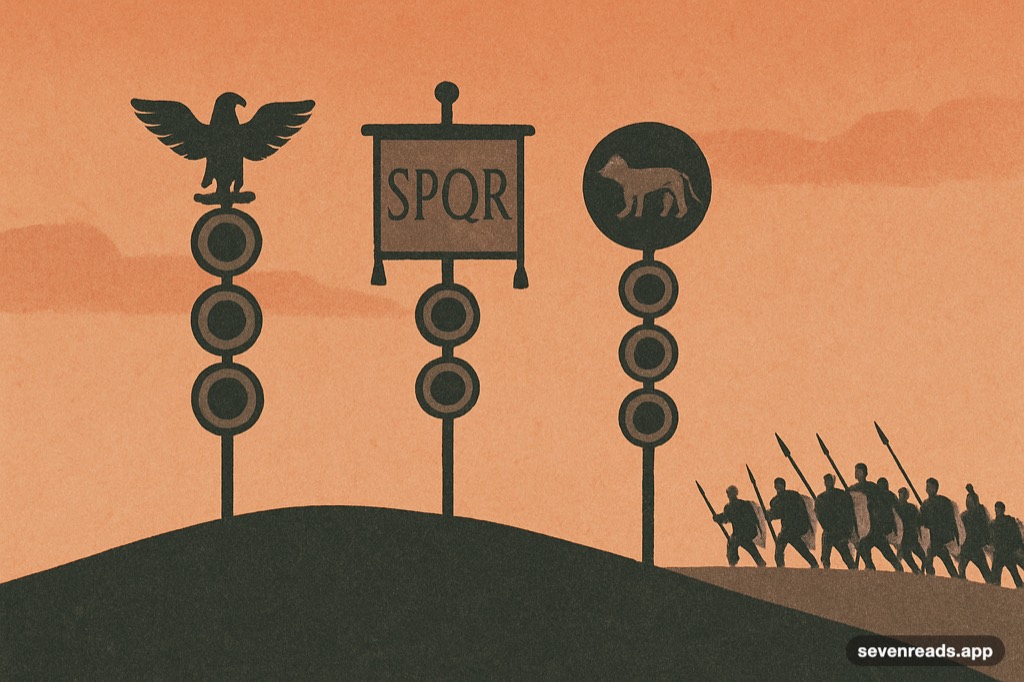
Veni, vidi, vici is Latin for "I came, I saw, I conquered" — Julius Caesar's complete report on his victory at Zela, in modern Turkey, in 47 BC. The campaign against King Pharnaces of Pontus had taken about five days. The three words were the point: where other generals sent dispatches, Caesar sent a shrug, and the shrug said it was so easy it needs no sentence. It may be the most quoted boast in history precisely because its engine is understatement.
Here's the real occasion, why the Latin snaps in a way translations can't, and what the phrase was actually engineered to do.
Plutarch and the Roman sources are free in Seven Reads — start reading today.
Get Seven ReadsThe battle behind it
Pharnaces had taken advantage of Rome's civil war to grab territory, and had mauled a Roman force the year before. Caesar, fresh from Egypt, marched fast, met him at Zela, and destroyed his army in a few hours — the fifth day after arriving in the region. Plutarch says Caesar wrote the three words to a friend in Rome; Suetonius says they were displayed on a placard in his triumphal procession, which is better theater and probably both are true. Either way the audience was Rome, not Pontus: with rivals still in the field, Caesar was advertising what happened to people who opposed him, in a format designed to travel.
Why the Latin snaps
The phrase is a rhetorician's jewel box. Three verbs, first person, perfect tense — no conjunctions (the figure called asyndeton, which makes events feel instantaneous), identical rhythm, and in Latin each word two syllables with alliteration on V (pronounced W: weni, widi, wiki). The grammar itself performs the message: no "and then," no logistics, no subordinate clauses — arrival, glance, victory, as if conquering were a single continuous gesture. "I came, I saw, I conquered" keeps the shape but loses the sound; the original is closer to a drumroll than a sentence.
The boast as political instrument
Context makes it pointed. Caesar had just crossed his Rubicon two years earlier; the Republic was in pieces; and his enemies' best argument was that the war against him was survivable. Three words that compress a kingdom's defeat into a breath were a message about resistance in general. It worked — and its maker had less than three years to enjoy it before the daggers answered on the Ides of March (that phrase too became Latin's property). Caesar's biography can be told in his three famous sentences: the gamble, the boast, the bill.
Its long echo
The template proved infinitely reusable — every "came, saw, conquered" headline, sports chant and product launch borrows the rhythm, and the parodies (Churchill on Attlee, "he came, he saw, he concurred") depend on everyone knowing the original. Plutarch's life of Caesar, where the story appears, remains the best read on the man — a few hours in the company of the writer who taught Shakespeare his Romans.
Frequently asked questions
What does veni vidi vici literally mean?
"I came, I saw, I conquered" — three first-person Latin verbs Caesar used to report his five-day defeat of Pharnaces at Zela in 47 BC.
How do you pronounce veni vidi vici?
Classical Latin: WEH-nee WEE-dee WEE-kee (V as W, C as K). Church Latin says VAY-nee VEE-dee VEE-chee; both are heard, the classical is what Caesar's contemporaries said.
Who did Caesar defeat when he said veni vidi vici?
Pharnaces II of Pontus, at the Battle of Zela in 47 BC — a campaign so brief that the three-word report was itself the boast. Plutarch and Suetonius both record the phrase.
The gamble, the boast, the bill.
Plutarch's Caesar is free in Seven Reads — start reading today.
Get Seven Reads