Pathos Meaning: The Argument Feelings Make
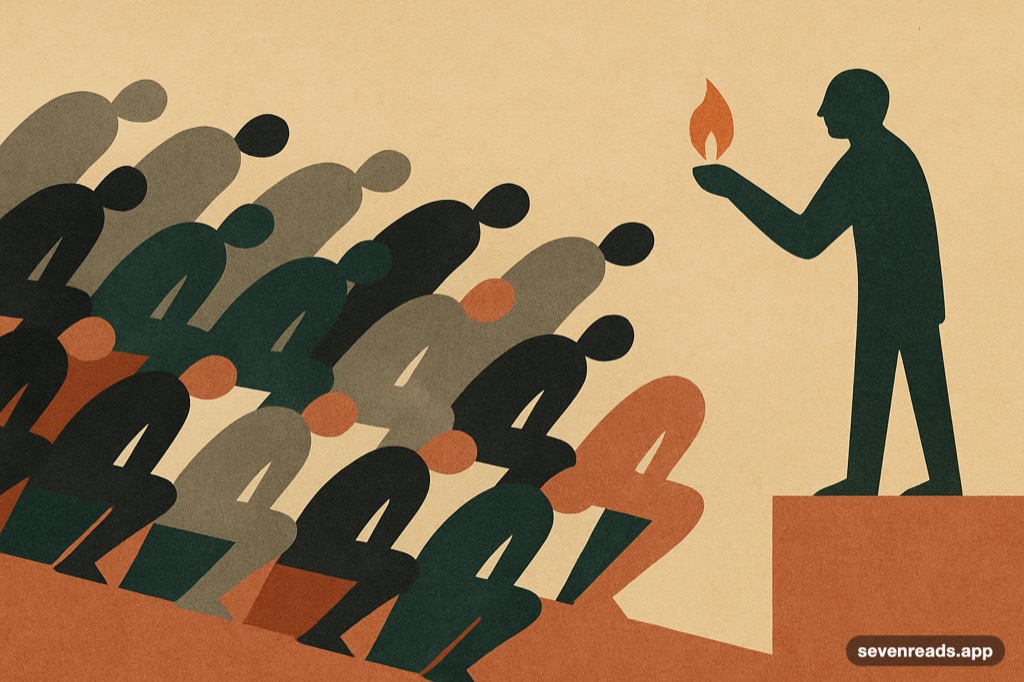
Pathos is Greek for "suffering, experience, what is felt" — and in rhetoric it names persuasion that works through the audience's emotions. It's the second of Aristotle's three appeals, beside ethos (character) and logos (argument), and it's the one with the bad reputation: "appealing to emotion" sounds like the opposite of thinking. Aristotle's view was more interesting — emotions, he argued, are themselves judgments about the world, and a speaker who changes what an audience feels has changed what it believes.
Here's the real meaning, the family of words it spawned, and the difference between pathos and manipulation.
Aristotle is free in Seven Reads — start reading today.
Get Seven ReadsAristotle's psychology of feeling
Book II of the Rhetoric is the first systematic map of emotions ever written, and its method is the meaning of pathos. Each emotion gets a definition, a diagnosis of who feels it, toward whom, and why: anger is pain at an unjustified slight from someone with no right to slight you; pity is pain at undeserved suffering that you can imagine reaching you. Notice what those definitions are — beliefs. Anger contains a claim ("this was unjust"); pity contains one too ("this could be me"). That's why pathos persuades: change the belief and the feeling follows; summon the feeling and the belief rides in with it.
The word's large family
The root spread everywhere. Sympathy and empathy: feeling with and feeling into. Apathy: not feeling. Pathetic: originally "moving, full of feeling" — its collapse into an insult is recent. Pathology: the study of suffering. Even passion arrives through Latin passio, translating pathos — which is why the Passion of Christ means his suffering, not his enthusiasm. When critics call a scene's emotion unearned, they reach for bathos — a deliberate 18th-century pun coined by Alexander Pope for pathos that faceplants.
Pathos vs. manipulation
The honest line is about fit. Pathos is legitimate when the emotion matches the reality — grief at a real loss, anger at a documented injustice. It curdles into manipulation when the feeling is disproportionate to the facts or is being used to smuggle past them. Aristotle's own test still works: strip the emotional language and check whether the argument underneath survives. If it does, the pathos was illumination — making the audience feel the weight of something true. If nothing's underneath, you've found the trick.
Where to see it mastered
The Rhetoric gives the theory; the classics give the practice. The Iliad's final book — Priam kneeling before the man who killed his son — is the most analyzed pathos in literature, and it works because every emotion in it is earned by twenty-three books of consequence. Compare any modern tearjerker and you can feel the difference between pathos built and pathos borrowed.
Frequently asked questions
What does pathos literally mean?
Greek for "suffering" or "what is felt." In rhetoric it means persuading through the audience's emotions — one of Aristotle's three appeals, with ethos (character) and logos (argument).
Is pathos a bad thing in an argument?
Not inherently — Aristotle treated emotions as judgments, so honest pathos means making an audience feel the true weight of the facts. It becomes manipulation when the feeling is meant to replace the facts rather than illuminate them.
What is the difference between pathos and bathos?
Pathos is emotion that lands; bathos is emotion that faceplants — a sudden drop from the moving to the ridiculous. Alexander Pope coined bathos in 1727 as a joke on failed pathos.
Feel the argument, then check it.
Aristotle's Rhetoric and the Iliad are free in Seven Reads — start reading today.
Get Seven Reads