Ethos Meaning: Character as an Argument
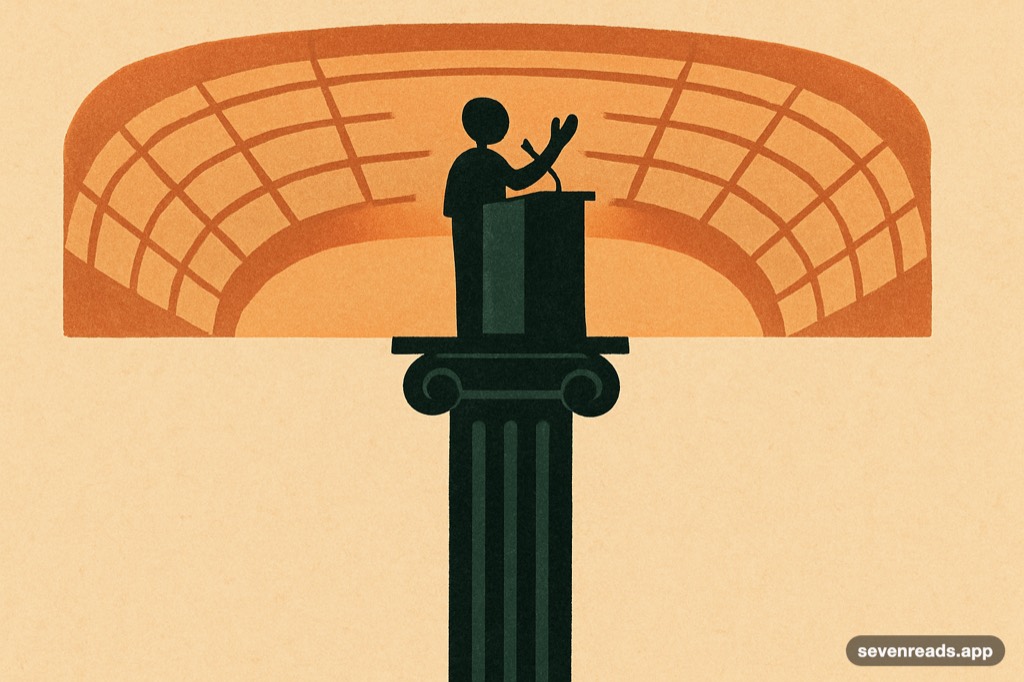
Ethos is Greek for "character" — and in the vocabulary of persuasion it means the argument your character makes before you say anything. Aristotle, who systematized it in the Rhetoric, called it one of the three means of persuasion: ethos (the speaker's credibility), pathos (the audience's emotion), and logos (the argument itself). Of the three, he said something surprising: ethos may be the most powerful. We believe fair-minded people faster, on everything, and almost regardless of proof.
Here's what the word covers, how it works, and why the oldest analysis of persuasion still reads like a manual for the internet.
Aristotle is free in Seven Reads — start reading today.
Get Seven ReadsAristotle's version: character built inside the speech
Aristotle's sharpest point is one modern usage blurs. Ethos, for him, isn't your reputation walking in the door — it's the character your speech itself constructs. A speaker earns belief, he says, by displaying three things: practical wisdom (they know how things work), virtue (they're honest about it), and goodwill (they want good things for you). Miss any one and trust fails a specific way: the fool, the liar, and the operator — smart, honest even, but not on your side. That three-part diagnosis of "why don't I trust this person?" has never been improved on.
The older meaning underneath
Before rhetoric took the word, ethos meant something wider: the settled character of a person or a people — "custom, disposition, habit." It's the root of ethics, and Aristotle's own Ethics runs on the connection: character (ēthos) is built from habit (ethos — the Greeks heard the two words as kin). When we say "the ethos of a newsroom" or "a company's ethos," we're using this older sense: the character a community's habits have built. The rhetorical and the moral meaning are one idea at two scales — what your habits make you, and what your speech shows you to be.
Ethos in the wild
Every "about the author" line, every credential in a byline, every white coat in an ad is manufactured ethos. So is the confession that costs something ("I was wrong about this last year") — Aristotle would note that admitting error displays honesty and goodwill at once, which is why it persuades. The dark side he also saw: ethos can be faked precisely because audiences use it as a shortcut past the argument. A reader's best defense is knowing the three components and checking them separately — plenty of speakers have wisdom and no goodwill.
Where to read it
The Rhetoric itself is startlingly practical — book II contains the first systematic psychology of emotions ever written, organized by what makes audiences persuadable. Pair it with the Nicomachean Ethics for the character half, and watch a master demonstration in Plato's Apology: Socrates on trial, constructing his ethos sentence by sentence while claiming to have no skill at speaking.
Frequently asked questions
What does ethos mean in simple terms?
Credibility — the persuasive force of the speaker's character. Aristotle broke it into practical wisdom, honesty, and goodwill toward the audience; a speaker missing any one stops being believed.
What are ethos, pathos and logos?
Aristotle's three means of persuasion: ethos is the speaker's credibility, pathos is appeal to the audience's emotions, and logos is the argument and evidence itself. Strong persuasion usually runs all three at once.
How is ethos related to ethics?
Same root — Greek ēthos, "character." Aristotle's Ethics argues character is built from habit; his Rhetoric shows character at work persuading. One idea at two scales: what your habits make you, and what your speech reveals.
The original manual of persuasion.
Aristotle's Rhetoric and Ethics are free in Seven Reads — start reading today.
Get Seven Reads