Nicomachean Ethics AI: a reading companion that never spoils it
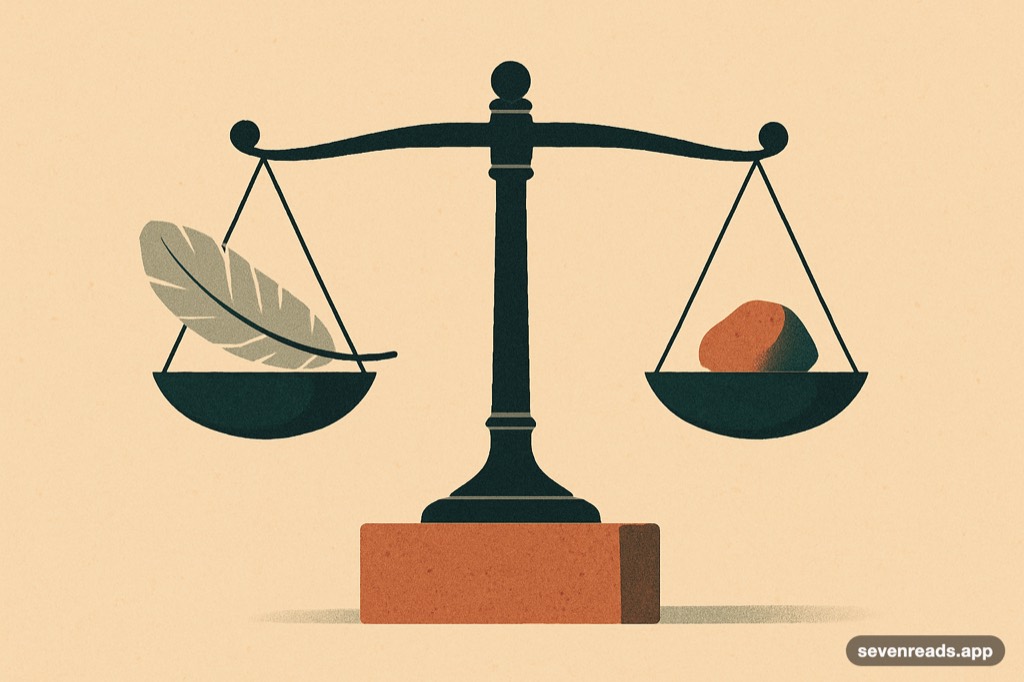
Reading Nicomachean Ethics with an AI companion means you can ask questions about the book — by typing or by voice — and get answers grounded in the pages you've actually read, never the ones ahead. The most practical book in ancient philosophy is also the worst-written great book — because it isn't written; it's lecture notes, terse and abrupt, on questions nobody has improved: what makes a life good, what habits build character, why friendship comes in kinds. A companion converts the shorthand back into the argument.
Nicomachean Ethics is free in Seven Reads — start reading today.
Get Seven ReadsWhat readers actually ask about Nicomachean Ethics
These are the kinds of questions a companion earns its keep on — asked mid-page, answered from the text you've read, without judgment and without leaks:
“Does "the mean" just mean moderation in everything?”
No — and the correction unlocks the book: the mean is relative to us and to situations, and some acts have no right amount. Courage isn't half-cowardice; anger at the right thing, at the right time, in the right measure, is the target. Ask the companion to run a virtue you care about through the full schema.
“What does eudaimonia actually mean if not happiness?”
Closer to flourishing — a property of a whole life in activity, not a mood. Much of Book I is Aristotle fencing the term off from pleasure, honor and wealth; getting this one word right up front changes what every later chapter is claiming.
“Why do friendship chapters take up two whole books?”
Because for Aristotle friendship is where ethics lives — the three kinds (utility, pleasure, the good) are a diagnostic that readers immediately apply to their own lives, usually with some discomfort. It's the most modern-feeling stretch of the book, and the best place to argue with it.
The spoiler problem with Nicomachean Ethics
Nothing to spoil, everything to unpack: technical terms (eudaimonia, virtue as hexis, the mean) carry precise machinery the text assumes, and the abrupt transitions are missing connective tissue a companion can rebuild. This is the classic where the reading experience improves most dramatically with help on the page. A general chatbot has read the whole book and will eventually let that knowledge shape an answer. Seven Reads' companion is position-aware: it retrieves only from text before your bookmark, so it cannot reveal what you haven't reached — ask about the ending early and it declines, and tells you where you are instead.
How to read Nicomachean Ethics with Seven Reads
Add the book from the built-in store — it's one of 50,000+ public-domain classics included free — and just start reading. Highlight what strikes you, add notes when the thought arrives, and ask the companion anything the moment you wonder. When you finish, Seven writes two things: the book's overview, and a synthesis of what you noticed, built from your own notes and questions. If it's your first classic in a while, our guide to starting the classics pairs well with this book.
Frequently asked questions
Can I read Nicomachean Ethics for free?
Yes. Nicomachean Ethics is in the public domain, and a well-formatted copy is included free in Seven Reads — one tap adds it to your library, where it reads like any other book, with your position, highlights and notes kept.
Can AI discuss Nicomachean Ethics without spoiling it?
Only if the AI is position-aware. Seven Reads tracks exactly where you are in Nicomachean Ethics and answers only from the pages behind your bookmark — everything ahead is structurally excluded, so asking about the ending gets a refusal, not a leak. No plot — the guide's job is decompression: restoring the arguments the notes abbreviate.
How long does it take to read Nicomachean Ethics?
Around 8 hours for most readers. At twenty minutes a day, that's roughly 3 weeks — and a streak matters more than any single sitting.
More classics to read with AI
- All 77 classics you can read with AI — the full list
- The Republic AI — Plato
- Meditations AI — Marcus Aurelius
- Beyond Good and Evil AI — Friedrich Nietzsche
- How the no-spoilers guarantee works