Catharsis Meaning: What Aristotle Actually Said
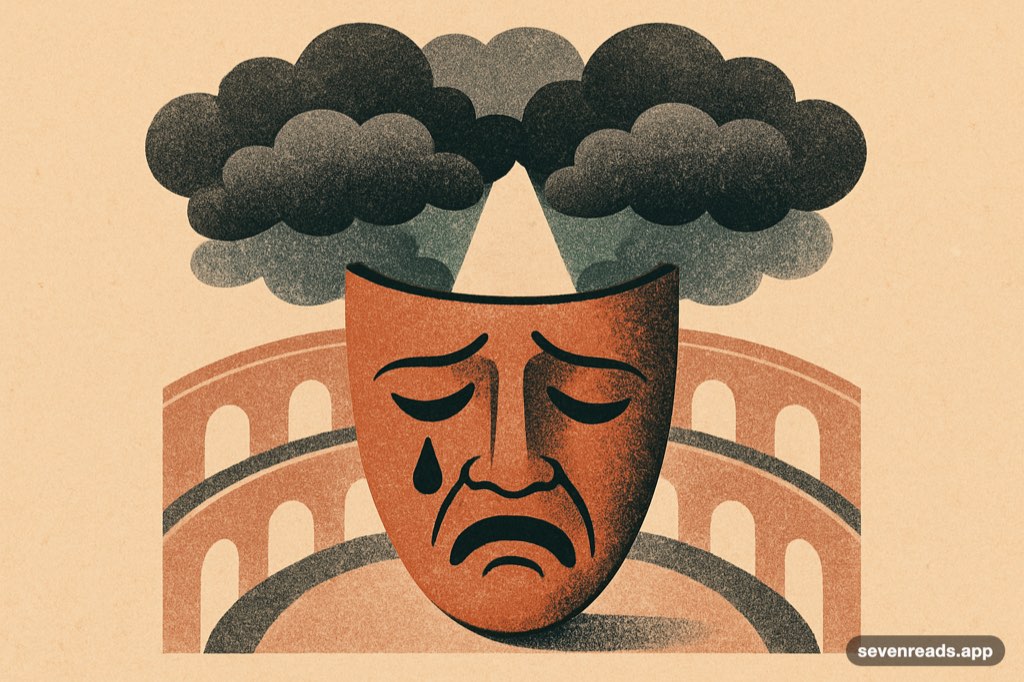
Catharsis — the cleansing feeling a sad story leaves behind — comes from a single sentence in Aristotle's Poetics: tragedy, "through pity and fear," accomplishes "the catharsis of such emotions." He never explains the word, scholars have argued about it for two thousand years, and the argument itself is the best short course in why stories affect us at all. It's also the reason you feel better after a tearjerker, which is stranger than it sounds.
Here's what the word meant, the three main readings, and why the idea still runs modern storytelling.
The Poetics is free in Seven Reads — start reading today.
Get Seven ReadsThe sentence that started it
The Poetics is Aristotle doing to tragedy what he did to animals: dissection and classification. Defining tragedy, he lists its features and ends with the payoff — it arouses pity and fear and effects their catharsis. In Greek the word was ordinary: medical purging, ritual purification, cleaning. Applied to what a play does to an audience, it's a metaphor — and Aristotle, uncharacteristically, never says which literal sense he's borrowing. Two millennia of theory live in that gap.
The three readings
Purgation (the medical reading): tragedy vents pity and fear like draining an excess humor — you cry it out and leave lighter. The oldest reading, and the one closest to how people use the word today. Purification (the moral reading): the emotions aren't removed but refined — tragedy trains you to feel pity and fear at the right things, in the right amounts, which plugs into Aristotle's whole theory in the Ethics that virtue is calibrated feeling. Clarification (the intellectual reading): the cleansing is understanding itself — the play lets you contemplate terrible things in a frame where they make sense, and the pleasure is comprehension. The likeliest answer is that the metaphor was chosen because it stretches; all three are true of a good tragedy.
Why sad stories feel good: the real puzzle
Notice what Aristotle is actually explaining: people voluntarily watch the worst thing that could happen to a family, and exit the theater satisfied. The paradox needs a mechanism, and catharsis is the first one on record — feeling dreadful things in a safe frame does something health-like. Every later account of why we consume tragedy (rehearsal for real grief, emotional workout, perspective machine) is a refinement of the same move. When a film is called "cathartic" in a review, that one Greek sentence is still doing the work.
Where to read it
The Poetics itself is 90 minutes and startlingly practical — plot beats character, stories need reversal and recognition, the hero should fall through error (hamartia) rather than villainy. Screenwriting manuals are its descendants. Read it beside one tragedy — Oedipus, which Aristotle treats as the type specimen, or the war-grief of the Iliad, tragedy's source — and test the theory against your own pulse.
Frequently asked questions
What does catharsis literally mean?
Cleansing — the Greek word covered medical purging and ritual purification. Aristotle borrowed it to name what tragedy does with the audience's pity and fear, without saying which sense he meant.
Where does the idea of catharsis come from?
One sentence in Aristotle's Poetics, defining tragedy as arousing pity and fear and accomplishing their catharsis. He never elaborates, which is why interpretations still compete.
Why do sad stories make us feel better?
That's the exact puzzle catharsis was coined to answer: terrible events in a safe frame seem to vent, refine or clarify our emotions. Modern accounts of tragedy's appeal are refinements of Aristotle's mechanism.
Ninety minutes to the source.
The Poetics and the tragedies it dissects are free in Seven Reads — start reading today.
Get Seven Reads