Hubris Meaning: What It Is and Where It Comes From
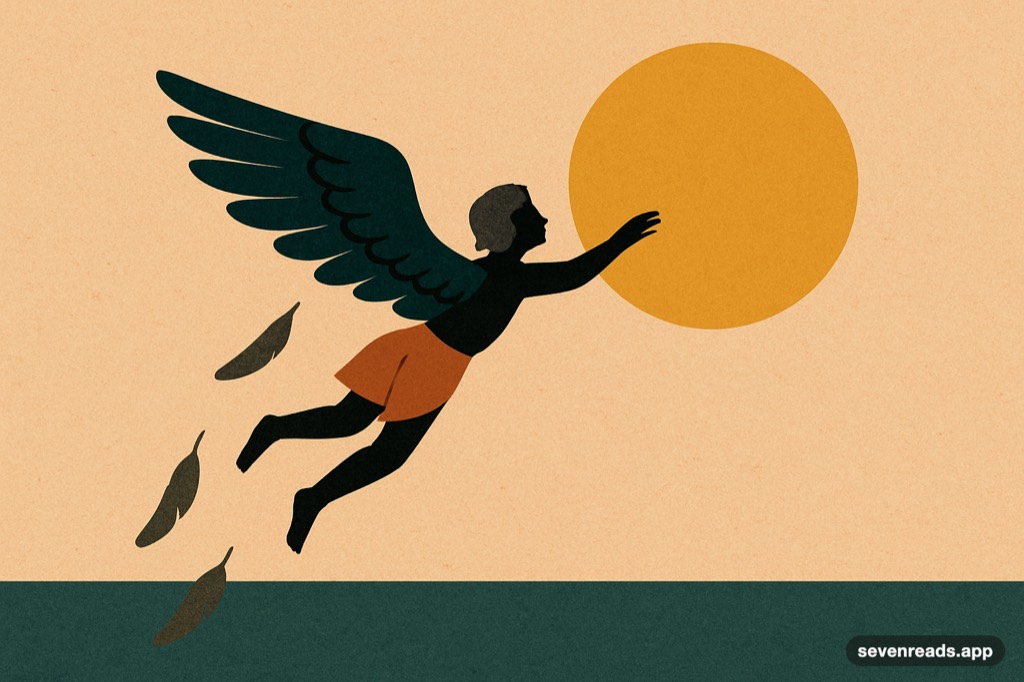
Hubris gets used now as a synonym for arrogance, but the Greek concept is more specific and more useful: it's the moment success convinces someone the rules — of gods, limits, mortality — no longer apply to them. In the classical pattern it's not a personality flaw but a trigger: hubris invites nemesis, the correction, and the space between them is where Greek tragedy lives. Once you have the pattern, you see it everywhere from Homer to earnings calls.
Here's the precise meaning, the cycle it belongs to, and the books that built it.
The original case studies are free in Seven Reads — start reading today.
Get Seven ReadsWhat the word meant in Greek
In Greek usage hubris was originally an act, not an attitude — outrage, the violent overstepping that humiliates someone else to assert your own greatness. Aristotle defines it as shaming others purely for the pleasure of superiority. Applied upward, against the gods or the order of things, it became the cosmic version: claiming more than mortal share. That's the sense that survived — not being proud of your work, but behaving as if limits are for other people.
The cycle: hubris, ate, nemesis
The full tragic pattern has three beats. Hubris — the overstep. Ate — the blindness or folly the gods send next, in which the doomed man makes his fatal choice feeling invincible. Nemesis — the correction, arriving with interest. The Iliad runs the cycle repeatedly (Agamemnon's seizure of Achilles' prize is textbook hubris; the deaths that follow are the bill), and the Odyssey gives it a perfect miniature: Odysseus, having blinded the Cyclops and escaped clean, cannot resist shouting his real name across the water — and that boast costs him ten years. The name-shout is the most instructive hubris scene in literature because the danger was already over. Hubris strikes at the moment of victory, not defeat.
Why the concept beats "arrogance"
Arrogance describes a person; hubris describes a moment — the specific point where confidence, freshly validated, stops checking. That's why the concept transfers so well out of mythology: the trade that works four times before the fifth doubles down, the empire's one war too many. The Greeks' insight was that the punishment isn't imposed from outside so much as purchased by the blindness itself: ate is just what unlimited confidence feels like from the inside. Know thyself was carved at Delphi as this pattern's antidote — remember what you are, especially when winning.
Where to read it
The Odyssey for the name-shout and its decade of consequences; the Iliad for the pattern at war-scale; Sophocles' Oedipus plays for the tragedy engine at maximum compression. Herodotus' Croesus story — the richest king in the world, told by Solon to count no man happy until he's dead, ignoring it — is the historians' version. All public domain, all on the shelf.
Frequently asked questions
What does hubris actually mean?
More than arrogance — it's the overstepping of limits that comes with success, behaving as if the rules (mortality, the gods, other people's dignity) no longer apply to you. In tragedy it triggers nemesis, the correction.
What is the relationship between hubris and nemesis?
Cause and consequence: hubris is the overstep, nemesis the retribution that follows. Greek tragedy inserts a middle stage, ate — the god-sent blindness in which the doomed choice feels safe.
What is the best example of hubris in literature?
Odysseus shouting his real name at the blinded Cyclops after escaping safely — a boast that costs him ten years. It shows hubris striking at the moment of victory, which is the concept's whole insight.
The oldest pattern, still running.
Homer and the tragedians are free in Seven Reads — start reading today.
Get Seven Reads