Ostracize Meaning: The Exile Vote Written on Broken Pottery
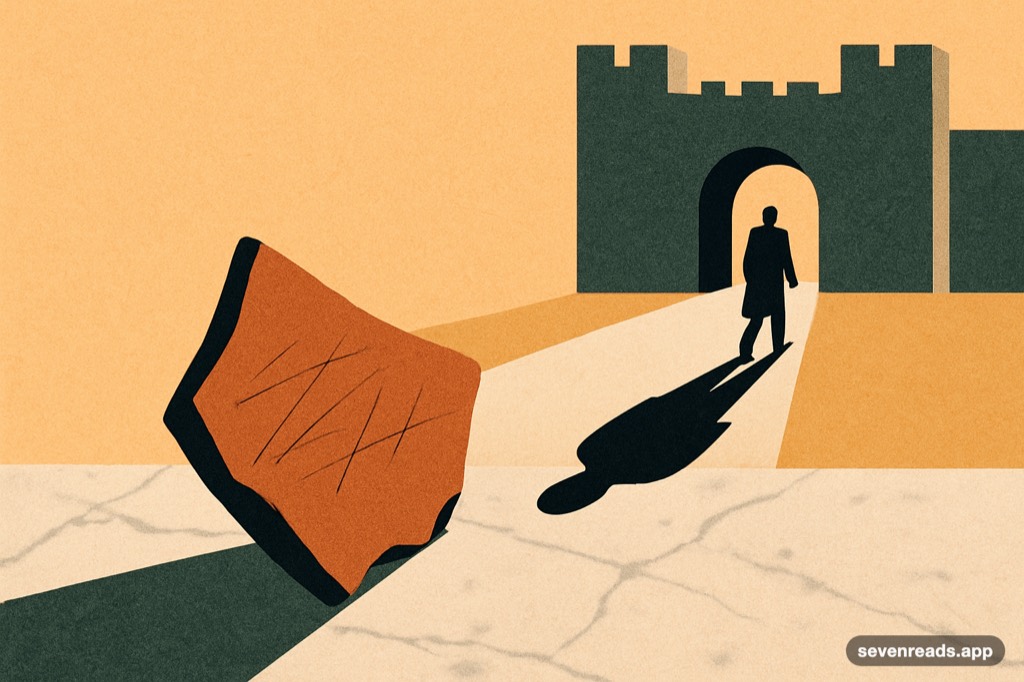
To ostracize is to shut someone out — of a friend group, a profession, polite society — by collective cold shoulder. The word preserves, almost untranslated, one of history's strangest institutions: Athenian ostracism, an annual reverse election in which citizens could vote to expel one man from the city for ten years. The ballot was an ostrakon — a broken pottery shard, antiquity's scrap paper — with a name scratched on it. No charge, no trial, no defense: enough shards, and you walked.
Here's how the machine worked, the famous story that shows why it existed, and what the modern word keeps of it.
The Athenian classics are free in Seven Reads — start reading today.
Get Seven ReadsThe machine
Once a year the Athenian assembly voted whether to hold an ostracism at all. If yes, two months later every citizen could scratch a name on a shard and drop it in the pen; given a quorum (six thousand), the man with the most shards had ten days to leave Attica for ten years. Crucially, it wasn't punishment — no crime was alleged, property stayed intact, and return after the term carried no stain. The device's purpose was prophylactic: democratic Athens, having expelled its tyrants, built an ejection seat for anyone growing dangerous enough to become one. It was used sparingly — perhaps a dozen times in a century — and always politically: the shards archaeologists dig up include batches pre-scratched with the same name in one hand, the ancient world's ballot-stuffing preserved in clay.
Aristides the Just, and the machine's dark elegance
The definitive anecdote is Plutarch's. During the ostracism vote of 482 BC, an illiterate citizen handed his shard to a stranger and asked him to scratch "Aristides" on it. The stranger — Aristides himself — asked what harm the man had done him. "None," said the voter. "I don't even know him. I'm just sick of hearing him called 'the Just.'" Aristides wrote his own name and dropped it in. The story is almost too perfect — the institution's flaw (excellence itself becomes the offense) and the man's character (he administers his own exile honestly) in one exchange — and it's why "ostracism" has meant exclusion of the conspicuous, not just the guilty, ever since.
From institution to social reflex
The modern word names the informal version every group runs without pottery: the freeze-out, the unreturned calls, cancellation, excommunication's secular cousin. What the usage keeps from Athens: collectivity (one enemy is a feud; the group's cold shoulder is ostracism), the absence of formal process (no charge, no defense — that's what makes it ostracism rather than firing or conviction), and the target profile Aristides fixed — the ostracized are as often the tall poppies as the transgressors. Modern psychology has measured what Athens intuited: social exclusion registers in the brain's pain systems; the shards were never just symbolic.
Using the word
"Ostracize" (verb), "ostracism" (the practice); the spelling keeps the Greek K-sound as a C. It's stronger than "exclude" — implying a group verdict and a sustained freeze — and it retains a faint note of the unjust or extra-legal, which makes it the wrong word for deserved formal sanctions and exactly the right one for the punishment no one will admit is being administered.
Frequently asked questions
What does ostracize mean in simple terms?
To exclude someone from a group by collective cold shoulder — no formal charge or process, just the freeze-out. From the Athenian vote that exiled citizens via pottery-shard ballots.
What was ostracism in ancient Athens?
An annual reverse election: citizens scratched a name on a pottery shard (ostrakon), and with a 6,000-vote quorum, the "winner" left the city for ten years — no crime alleged, no trial, property kept.
Why was Aristides the Just ostracized?
Per Plutarch, partly from sheer fatigue with his reputation — one voter wanted him exiled just for always being called "the Just." Aristides scratched his own name on the man's shard.
The freeze-out, invented formally.
Plutarch and the Athenians are free in Seven Reads — start reading today.
Get Seven Reads