Draconian Meaning: The Code Written in Blood
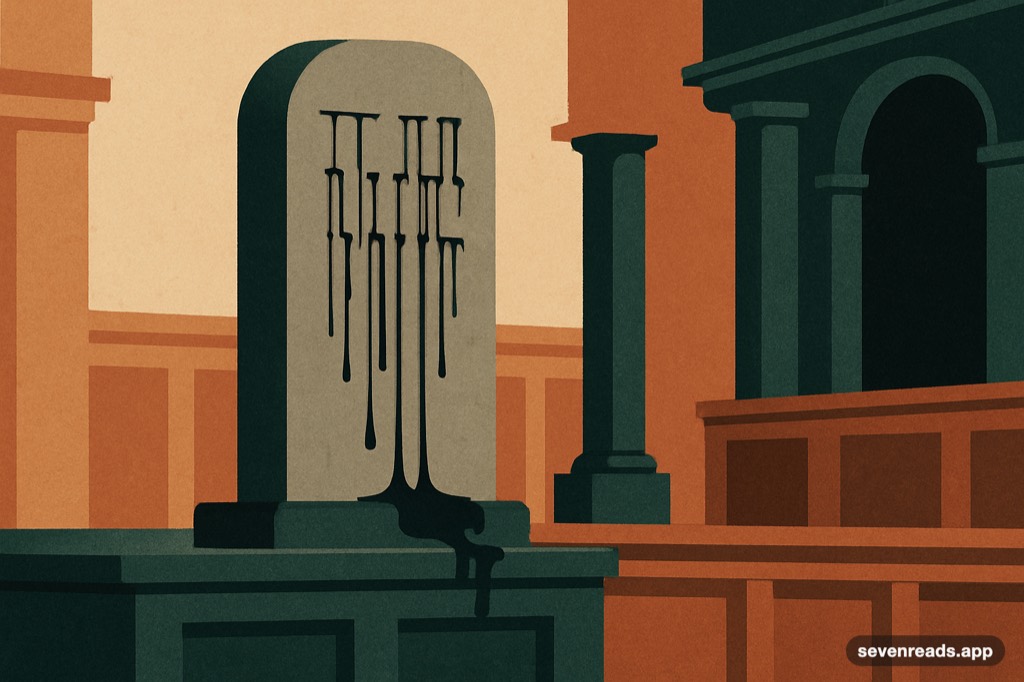
Draconian means excessively harsh or severe — applied, almost always, to laws, rules, punishments and crackdowns: "draconian measures," "draconian budget cuts." The word is a man: Draco, who around 621 BC gave Athens its first written law code, and made such liberal use of the death penalty that antiquity itself was appalled. The orator Demades' verdict became the permanent epitaph: Draco's code was "written not in ink, but in blood."
Here's the real lawgiver, the paradox that he was also a reformer, and how to use his adjective precisely.
The law-and-justice classics are free in Seven Reads — start reading today.
Get Seven ReadsThe code written in blood
What shocked the ancients was Draco's tariff: death for murder — but also, tradition reports, death for idleness, and death for stealing a cabbage or an apple. Asked why petty crimes drew the ultimate penalty, Draco is said to have answered that small offenses deserved death, and he could think of nothing worse for the great ones — the most chilling sentencing philosophy on record, delivered with a bureaucrat's calm. Within a generation, Solon repealed nearly all of it (keeping only the homicide provisions), which is its own verdict: the code was so severe its replacement founded Athens' reputation for law.
The paradox: the harsh code was progress
Here's what the insult forgets. Before Draco, Athenian "law" was unwritten custom, administered by aristocrats who told you what it required after you'd broken it — and enforced by blood feud. Writing the law down, however savage its content, was radical: fixed, public rules that even nobles couldn't invent on the fly, and state process in place of vendetta. Draco's code was simultaneously monstrous in penalty and foundational in principle — the first draft of the idea that the law should be knowable. The lesson tucked inside the etymology: severity and legality are different axes, and reformers can be tyrants of penalty. Plato's Republic takes up exactly the question Draco botched — what punishment is for — and antiquity's debate on it never closed.
What the word means now, exactly
Modern usage keeps two of Draco's signatures. Disproportion: draconian measures are harsh relative to the offense — a life sentence for jaywalking, a total ban to fix a small abuse. Indiscriminateness: the draconian rule hits everything in reach with the same maximum — one penalty, universally applied, Draco's actual method. That's what separates "draconian" from merely "strict" (which can be proportionate) or "brutal" (which needs no rules at all). The word wants a system being too severe — laws, policies, codes — which is why "draconian parenting" lands and "draconian weather" doesn't.
Using it well
It's an evaluative word — using it takes a side — so in careful writing it should be earned by showing the disproportion, not just asserted. Capitalization: lowercase (the man became an adjective fully; compare quixotic). And the fair-use footnote his ghost is owed: the harshest lawgiver in the Western record was also the first to believe you should be able to read the law that kills you. Both halves are in the word.
Frequently asked questions
What does draconian mean in simple terms?
Excessively harsh and severe — used of laws, rules and crackdowns whose penalties are wildly disproportionate: from Draco's Athenian code of 621 BC, where cabbage theft could carry death.
Who was Draco?
Athens' first written-law giver (c. 621 BC), whose code applied death so broadly it was said to be "written in blood." Solon repealed nearly all of it within a generation.
What is the difference between draconian and strict?
Proportion: strict rules can fit the offense; draconian ones are disproportionate and indiscriminate — one maximum penalty for everything, which was literally Draco's method.
The law, before it learned mercy.
Plutarch, Plato and the justice classics are free in Seven Reads — start reading today.
Get Seven Reads