Quixotic Meaning: The Compliment Hidden in the Insult
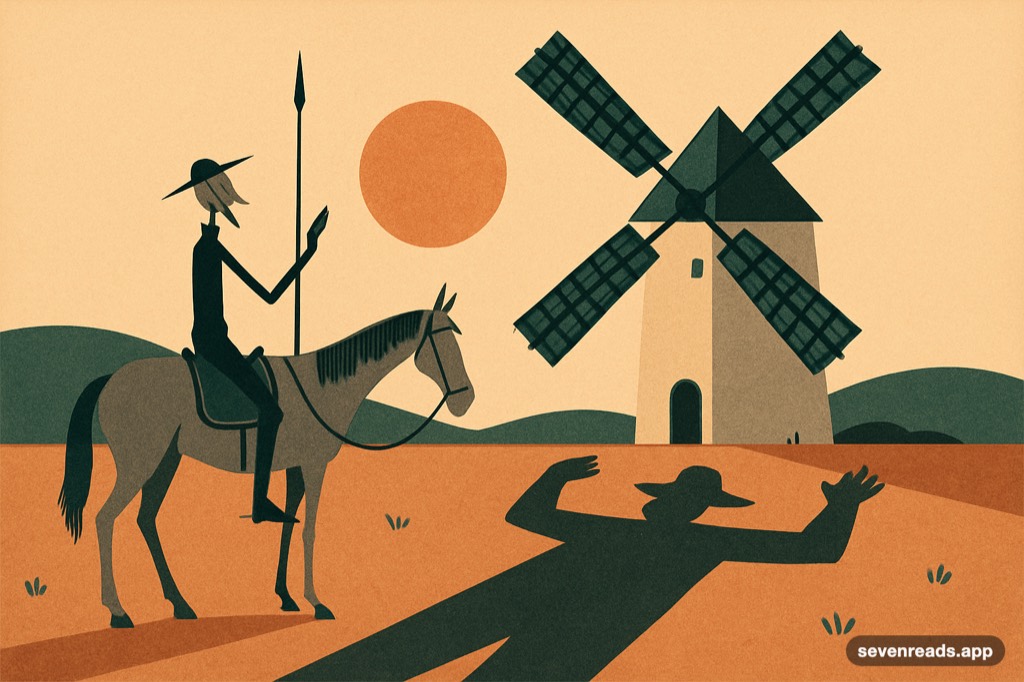
Quixotic (kwik-SOT-ik) means extravagantly idealistic — pursuing noble visions with a disregard for practicality that shades into folly. It comes from Don Quixote, Cervantes's 1605 knight who read so many romances of chivalry that he rode out to live one, famously charging windmills he took for giants. The word is usually an insult with a bow on it: we say "quixotic campaign" about causes we find admirable and doomed in the same breath. The interesting part is that the novel itself spends a thousand pages complicating exactly that verdict.
Here's what the word means in practice, and what its source keeps saying underneath it.
Don Quixote is free in Seven Reads — start reading today.
Get Seven ReadsWhat the word actually charges
Call a plan quixotic and you make three claims at once: the goal is noble, the pursuit is sincere, and the whole thing ignores how the world works. The word doesn't mean stupid, corrupt or crazy — a quixotic person sees the facts and rides anyway, or sees a better world so vividly the facts lose their vote. That's why the accusation flatters as it dismisses. Nobody calls a tax dodge quixotic. The word is reserved for people who are wrong in a way that requires idealism — which is a compliment wearing a smirk.
The windmills, precisely
The famous episode is shorter and stranger than its reputation. Quixote sees thirty or forty windmills, announces they are giants, and charges; Sancho Panza tells him plainly, twice, that they are windmills; a sail sends knight and horse sprawling. Quixote's response defines the word forever: an enchanter, he explains, transformed the giants into windmills at the last second to cheat him of victory. The madness comes with a maintenance system — every refutation is absorbed as further proof, a self-sealing logic the catch-22 family would later formalize. What keeps it from being sad is that Cervantes plays it, simultaneously, as slapstick and as a man refusing a world too small for him.
What the novel does to the insult
Book by book, the joke inverts. The sane characters — priests, dukes, innkeepers — reveal themselves as petty, cruel or bored; the madman is generous, brave and increasingly wise between his fits. Sancho, brought along as the voice of realism, gradually catches the dream (his governorship of a fake island, meant as mockery, becomes a passage of real statesmanship). By the deathbed ending, when Quixote recovers his sanity and renounces chivalry, it's the sane world that feels like the loss. Cervantes built the word's double edge in from the start: the question is never whether Quixote sees the world falsely — it's whether seeing it truly is worth what the seeing costs.
Using it well
The word earns its keep where idealism and impracticality genuinely meet: a quixotic lawsuit, a quixotic bid to save a dying language. Used of mere long shots it's slack; used of cynical ventures it's wrong. And once in a while it's worth remembering the novel's caveat — history's shortlist of the quixotic includes a number of causes that, embarrassingly for the realists, won.
Frequently asked questions
What does quixotic mean in simple terms?
Idealistic beyond practicality — pursuing a noble vision in cheerful defiance of how the world works. It's from Don Quixote, the knight who charged windmills believing them giants.
How do you pronounce quixotic?
Kwik-SOT-ik — the word anglicized fully, unlike the name Quixote (kee-HOH-tay), which kept its Spanish sound. Saying "kee-HOT-ik" is a common overcorrection.
Is being called quixotic an insult?
A double-edged one: it concedes your goal is noble and your effort sincere while judging the whole doomed. The novel itself spends a thousand pages asking whether that judgment is on the knight or on the world.