Midas Touch Meaning: The Blessing That Was the Curse
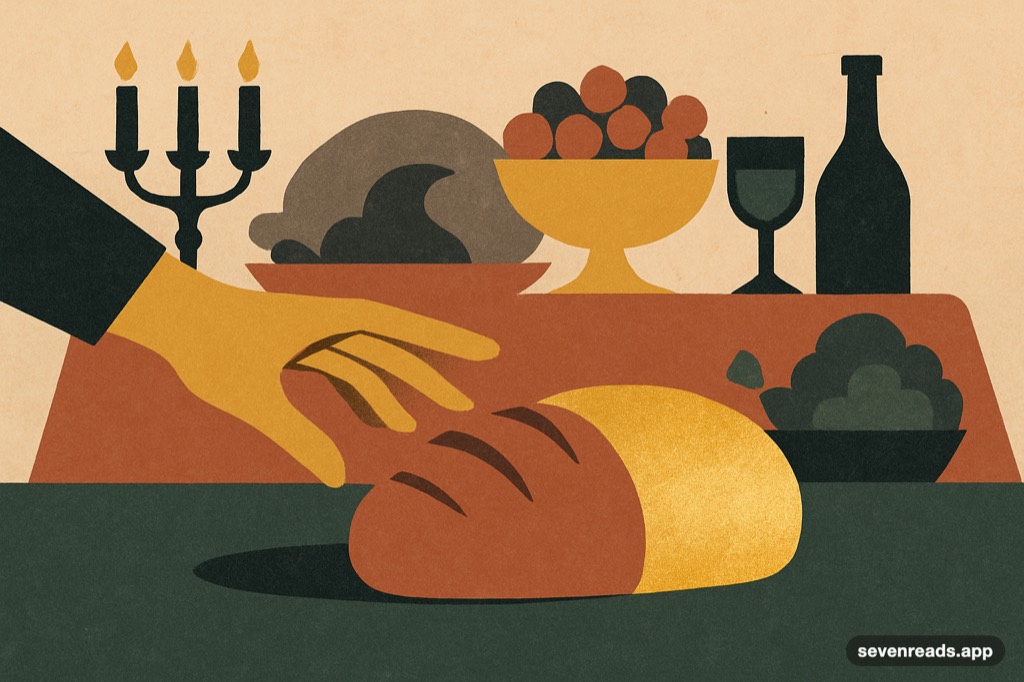
"The Midas touch" means the knack of turning everything to profit — said admiringly of investors and founders whose every venture gilds. The compliment gets the myth exactly backwards. In the original story, told best in Ovid's Metamorphoses, the golden touch is a catastrophe by dinnertime: King Midas gets his wish, and discovers that bread, wine, and (in the version everyone remembers) his own daughter all obey it. The myth is not about success. It's the ancient world's cleanest parable about wishes that don't survive contact with themselves.
Here's the full story — including the donkey-ears second act nobody quotes — and what the phrase forgets.
Ovid's Metamorphoses is free in Seven Reads — start reading today.
Get Seven ReadsThe wish, granted literally
Midas earns a favor from the god Dionysus (he'd hosted the god's lost companion Silenus with honor) and is offered anything. He asks that whatever his body touches turn to gold. Ovid plays the discovery as dawning horror in real time: a twig — gold, delightful; a stone — gold; then the reaching for food, and the bread hardening in his mouth, the wine turning to "molten gold" at his lips. The richest man alive begins to starve. The daughter's transformation is a later addition (Hawthorne fixed it in the popular version), but it only literalizes what Ovid already wrote: a touch that converts everything into wealth converts everything out of being anything else — food, drink, and whatever you love.
The mercy, and the point
Midas begs for the gift's removal, and Dionysus — amused, merciful — sends him to wash in the river Pactolus, which ran gold-bearing sands ever after (a real river in Lydia, whose gold dust funded the historical kingdom of Croesus; the myth is partly an origin story for actual riches). The structure is what makes the parable precise: the wish isn't punished for greed by some external judge — it simply executes as specified, and the specification was the punishment. Midas asked for a universal converter and got one. The myth's question for every wisher since: what in your life are you assuming the wish will politely exempt?
The forgotten second act
Ovid continues: Midas, cured of gold, swears off wealth and becomes a devotee of the wild — then judges a music contest between Pan and Apollo, and rules against Apollo. The god's response: donkey's ears, which Midas hides under a turban. Only his barber knows; bursting with the secret, the barber whispers it into a hole in the ground — and the reeds that grow there whisper it forever after: "King Midas has ass's ears." The two acts are one portrait: a man whose judgment fails upward and downward — valuing gold over life, then noise over music — and whose secrets won't stay buried. Antiquity's Midas wasn't a success story misread; he was a full study in bad judgment wearing a crown.
Using the phrase with its shadow
As pure praise, "the Midas touch" works and everyone understands it. But the myth's shadow is the phrase's best feature, and writers who know it get a free second meaning: the executive whose golden touch converts every passion project into product, the collector whose acquisitions stop being loved things — hubris in its domestic size. The original story's verdict survives every retelling: the touch is only a blessing if some things refuse it.
Frequently asked questions
What does the Midas touch mean?
The knack of turning everything into gold or profit — used as a compliment. In the myth itself the touch is a curse: Midas's food, drink and (in later versions) his daughter all turn to lifeless gold.
What is the moral of the King Midas story?
Wishes execute as specified: a universal converter converts everything, including what you love. The myth punishes nothing — it simply grants the request, which was the punishment.
What happened to Midas after the golden touch?
Cured in the river Pactolus (explaining its real gold-bearing sands), he foreswore wealth — then judged Pan's music better than Apollo's and was given donkey's ears, a secret his barber whispered to the reeds, which still repeat it.
Read the wish in full.
Ovid's Metamorphoses is free in Seven Reads — start reading today.
Get Seven Reads