Is Ulysses Worth Reading? An Honest Answer
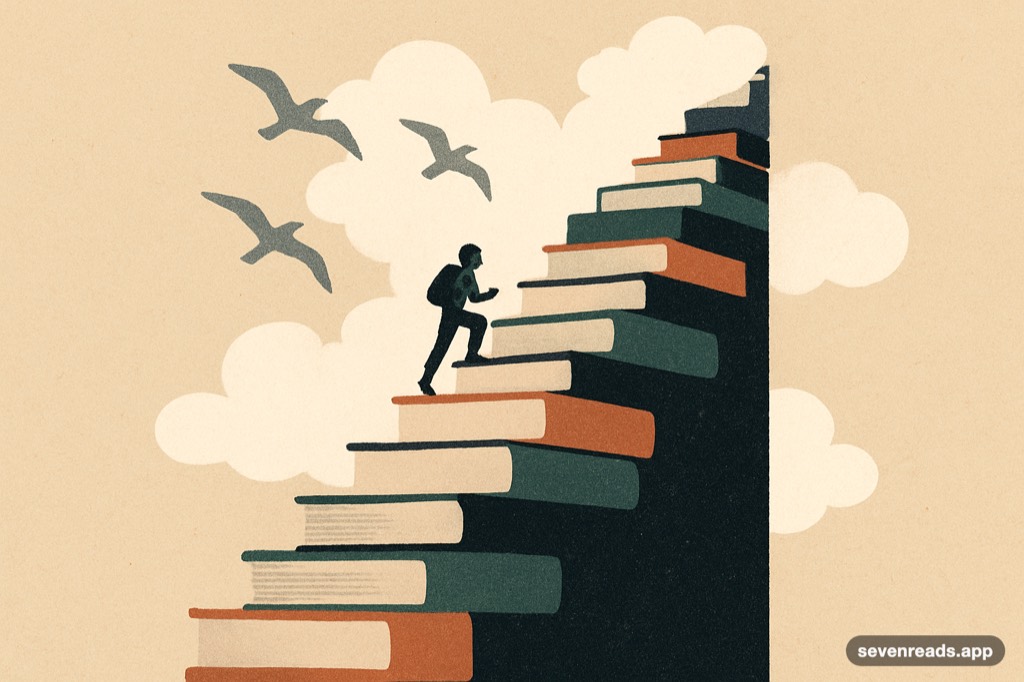
Honest answer: Ulysses is worth reading for perhaps a third of the people who attempt it, transformative for a tenth, and abandoned by half — and which group you land in is largely predictable in advance. The book delivers real, unfakeable rewards: the funniest and most humane portrait of an ordinary mind in literature, and stylistic fireworks nobody has matched. It also demands more per page than anything else on the classics shelf, and pretending otherwise sells more copies than it finishes.
Here's the honest sorting: what you get, what it costs, who should go now, and who should wait.
If you attempt it, Seven Reads gives you the per-episode help on the page — spoiler-free.
Get Seven ReadsWhat you actually get
Under the difficulty is a warm book: one ordinary Dublin day — a funeral, errands, lunch, an evening — inside the head of Leopold Bloom, the most fully rendered decent person in fiction. The famous experiments (each episode reinventing style) aren't decoration on the story; they're the claim that ordinary life deserves every register literature has. When it lands, it permanently raises what you think novels can do. That's the tenth-of-readers outcome, and it's real.
What it costs, specifically
Three episodes do most of the damage: Proteus (episode 3, Stephen's beach walk through untagged philosophy), Oxen of the Sun (14, English prose history performed in sequence), and Circe (15, a 150-page hallucination in play format). Allusion density is constant — Homer, liturgy, Dublin trivia — and the book never explains itself. Unassisted, this is why attempts die; the abandonment is structural, not a character flaw. With per-episode help on the page — what's happening plainly, what this style is doing — completion odds change dramatically, which is why the guided-read tradition exists.
Who should read it now
Go now if: you loved Dubliners or Portrait of the Artist (the direct on-ramps — read them first regardless); you enjoy difficulty as play rather than tax; or modernism itself interests you and you want the summit. Wait if: you're rebuilding a reading habit (this book eats momentum), you haven't enjoyed Joyce's easier work, or you're reading from obligation — Ulysses punishes duty-readers with special cruelty, and the canon has better first dates.
The honest verdict
Worth it — conditionally, preparedly, and not first. Read Dubliners this month instead if you're deciding; it's five hours, its last story is among the best in the language, and it tells you exactly whether Joyce's Dublin is a place you want a full year's residence in. Ulysses isn't going anywhere; it's been patiently outlasting its reputation for a century.
Frequently asked questions
Is Ulysses really that hard to read?
Three episodes are genuinely brutal and the allusion density is constant — but the underlying story is simple and warm, and per-episode guidance (what's happening plainly, what the style is doing) converts it from wall to climb. Hard, yes; impossible, no.
What should I read before Ulysses?
Dubliners, then A Portrait of the Artist as a Young Man — Joyce's own on-ramp, introducing his Dublin and Stephen Dedalus. If Dubliners doesn't move you, Ulysses probably isn't your mountain yet, and that's useful to learn in five hours instead of fifty.
How long does Ulysses take to read?
Around 18 hours of raw reading, but realistically 25–30 with the pausing and help the book rewards — two to three months at a daily half hour. Budget for the long version; sprinting it defeats the point.
Decide with Dubliners first.
Dubliners, Portrait and Ulysses are all free in Seven Reads — with the on-page, episode-aware help that changes the completion odds.
Get Seven Reads