How to Build a Reading Habit That Sticks
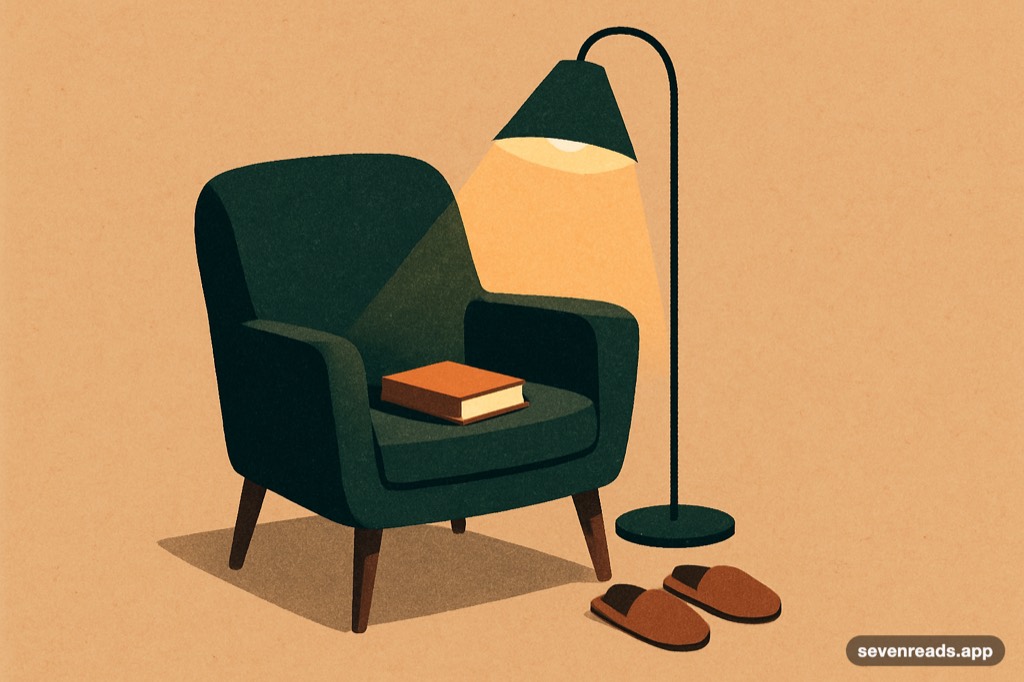
A reading habit that sticks is built like any durable habit: a fixed daily slot (twenty minutes beats an aspirational hour), an environmental trigger that makes starting automatic, friction removed between you and the page, and — the part reading advice always skips — books you actually want to read next. Motivation gets you through week one; architecture gets you through month three, which is where reading habits either become identity or quietly dissolve.
Here's the architecture, piece by piece.
Seven Reads tracks honest streaks — the habit's scoreboard, built into the reader.
Get Seven ReadsDaily and small beats weekend and heroic
The binge model — no reading all week, three hours on Sunday — fails structurally, not morally: context evaporates between sessions (who are these characters?), each restart pays a re-entry tax, and one busy weekend kills the whole system. Twenty daily minutes reverses every failure: the book stays warm, restarts are instant, and the habit survives bad weeks because the unit is small enough to protect. The math still astonishes people: twenty minutes daily is roughly 1,800 pages a quarter — a dozen average books a year, from a slot shorter than most commutes. Streaks work precisely because they enforce this shape.
Anchor, trigger, remove friction
Habits attach to existing routines, so pick the anchor deliberately: after morning coffee, on the train, in bed before sleep — same slot daily, because variable timing means daily renegotiation, and renegotiation is where habits die. Then stage the environment: book visible and waiting (on the pillow, in the bag's outer pocket, the reader app on the phone's first screen), so starting requires zero decisions. Friction is the real enemy — every step between impulse and page costs conversion, which is also why always-with-you matters: the phone you carry anyway, holding your whole library with your place kept, converts waiting rooms and queues into found reading time.
The phone problem, handled honestly
The standard advice — leave the phone in another room — throws out the library with the distractions. The workable version is making the phone a better reading device than a distraction device during the slot: notifications silenced for twenty minutes, the reader one tap away, and a reading experience genuinely engaging enough to compete (a book you're enjoying, plus focus tactics for the wandering stretches). Readers who fight their phone lose eventually; readers who convert it stop needing the fight.
The book-choice rule nobody follows
Most habit collapses are actually book mismatches: dutiful choices ("I should finish this") that make the daily slot feel like homework. Two rules fix it. Quit freely: abandoning a book that isn't working is habit maintenance, not failure — the habit is reading, not this book. Queue by pull: keep three or four next-books you're genuinely eager for, so finishing (or quitting) never opens a gap where the habit stalls. Momentum compounds; a shelf of books that are actually fun is better habit infrastructure than any tracking system — though having both is better still.
Frequently asked questions
How long does it take to build a reading habit?
Habit research averages around two months for automaticity, with wide variance — but the practical marker is earlier: when the daily slot feels like default rather than decision, usually two to three weeks of unbroken small sessions.
How many minutes a day should I read to build the habit?
Twenty is the sweet spot: small enough to protect on bad days, large enough to sustain a book's momentum — and it compounds to roughly a dozen books a year. Scale up after the habit holds, not before.
Should I force myself to finish books?
No — dutiful slogs are the leading cause of habit death. Quit freely, keep a queue of books you're eager for, and protect the slot rather than any particular title. The habit is reading; books are interchangeable fuel.
Architecture, installed tonight.
Seven Reads keeps your library one tap away, your place held, and your streak honest — the habit's whole scaffolding in the phone you already carry.
Get Seven Reads