Reading Streaks: Why They Work
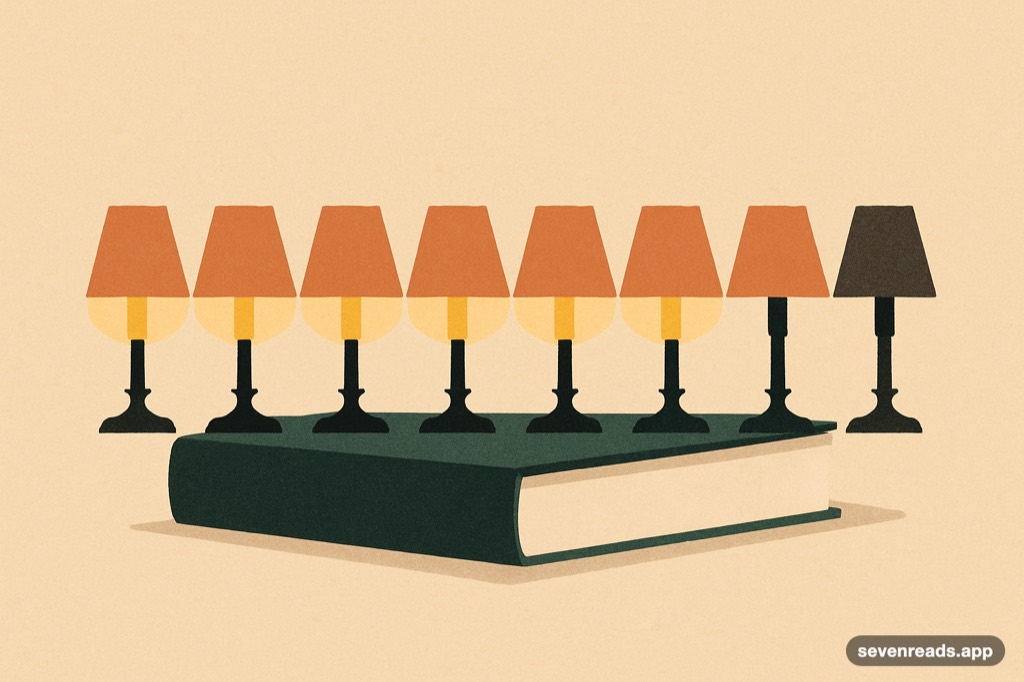
Reading streaks work because they attack the actual failure point of reading lives — not speed, not comprehension, but showing up — with the most reliable motivator behavior science has cheap access to: an unbroken chain you don't want to break. A streak converts "read more" (a wish) into "read today" (a decision with a deadline), and its daily verdict builds the identity — someone who reads every day — that outlasts any individual goal. The mechanism is real; so are its traps, and honest tracking is what separates the two.
Here's the psychology, the design requirements, and the burnout trap avoided.
Seven Reads runs honest streaks — the clock counts only real reading, and quiet weeks say so.
Get Seven ReadsThe mechanism: chains, identity, floors
Three forces stack. Loss aversion: a 47-day streak makes tonight's twenty minutes a defense of accumulated value — and humans defend holdings far more fiercely than they pursue gains; the chain literalizes it. Identity evidence: every consecutive day is an argument that reading is what I do, and identity-based habits outlast outcome-based ones because they survive goal completion. The floor effect: a streak's minimum unit (ten or twenty minutes) sets a floor under bad days — and floors are what habits die without, since the binge-and-gap pattern fails structurally regardless of total hours. The streak isn't the reading; it's the scaffolding that guarantees the reading a daily slot to happen in.
Honest tracking, or the metric rots
Streaks inherit metric risk: track the wrong thing and the chain optimizes theater. The requirements: measure real reading — time actually on pages, not app-opens or page-flips; a clock that pauses when you do keeps the streak meaning what it claims. Keep the unit honest but small — large minimums break chains on hard days and breed resentment; the floor should be clearable in any survivable day. Let quiet weeks show — a tracker that inflates or forgives silently teaches you to distrust it; the honest metric argument applies doubly to the metric you check daily.
The burnout trap, and the repair rule
The known pathology: streaks can invert from scaffolding to tyranny — reading resentfully at 11:50pm to feed the counter, or collapsing entirely after a break because "it's ruined." Two design answers. The floor stays trivially small, so feeding the streak never costs more than minutes — resentment starts where the unit outgrows bad days. And breaks get a repair rule declared in advance: a broken streak restarts the chain, not the identity — the record of the old streak stands as evidence, and the first link of the new one goes down the same night. Streak-keepers who pre-authorize the restart keep reading; perfectionists who treat day-one-again as failure are writing next year's comeback post.
Streaks versus the alternatives
Against page-count goals: streaks win on honesty (pages incentivize skimming; minutes don't) and on bad days (any floor-clearing counts). Against no tracking: temperament decides — some readers' habits are self-sustaining, and for them a tracker is noise; but most lapsed reading lives show the same autopsy (no daily structure, gaps compounding), which is precisely the disease streaks treat. The test is a month's trial: if the chain pulls you to the page on days you'd have skipped, it's working; if it only decorates days you'd have read anyway, drop it without guilt. The streak serves the shelf — never the reverse.
Frequently asked questions
Do reading streaks actually help you read more?
For most people, measurably — the unbroken-chain effect converts intention into daily decisions, and the small floor guarantees bad-day minimums that binge-pattern reading lacks. The month's trial tells you if you're in the minority it doesn't help.
What should a reading streak actually track?
Real reading time — a clock that runs only during genuine reading and pauses when you do. App-opens and page-flips corrupt the metric; minutes on pages keep the streak's daily verdict honest.
What happens when I break my streak?
Apply the pre-declared repair rule: the old streak stands as evidence, the new chain starts the same night. Restart cost is the habit-killer, not the break itself — pre-authorizing day-one-again is what separates a gap from a relapse.
Start link one tonight.
Seven Reads counts only honest minutes — visible streaks, real floors, and a reading life the chain protects instead of performs.
Get Seven Reads