Deus Ex Machina Meaning: The God From the Machine
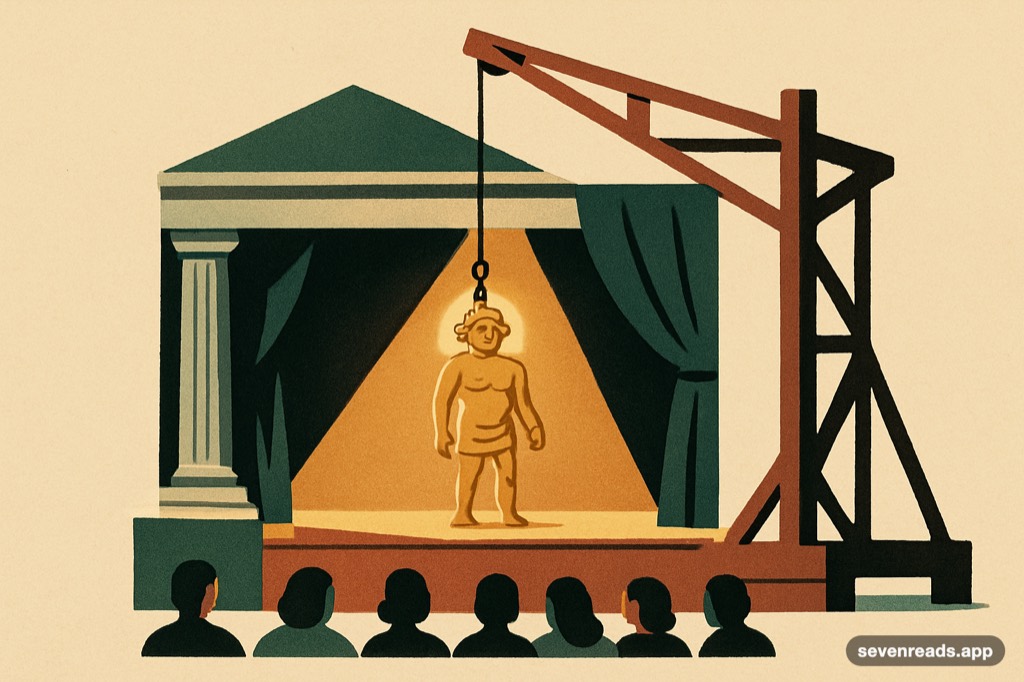
Deus ex machina is Latin for "god from the machine," and the machine was real: Greek theaters used a crane (the mēchanē) to swing an actor playing a god over the stage, where he would descend and sort out the plot by decree. The term now means any ending rescued by something the story never earned — the surprise inheritance, the sudden army, the previously unmentioned power. It's been a term of abuse for over two thousand years, because the first great critic of storytelling made it one.
Here's the original stagecraft, Aristotle's objection, and the rare conditions under which the device works on purpose.
Aristotle's Poetics is free in Seven Reads — start reading today.
Get Seven ReadsThe crane and its critics
Euripides was the great crane-user — his Medea ends with the heroine escaping in the sun-god's chariot, dead children aboard, beyond all human justice. Even in antiquity this drew fire. Aristotle's Poetics makes the classic ruling: plot resolutions "must arise from the plot itself" — the machine should be reserved for events outside the drama, things past or future that need announcing. His principle is bigger than the crane: each event should follow from what came before necessarily or probably. The deus ex machina offends because it swaps causation for convenience at the exact moment causation matters most.
Why endings tempt it
An ending is where a story pays its debts, and debts are expensive. A writer who has built a genuinely impossible situation faces two honest options — let the catastrophe land, or reveal that escape was seeded all along — and one dishonest one: reach outside the story for rescue. Audiences feel the difference immediately even without the vocabulary, because a story teaches its own rules as it goes, and a rescue from nowhere breaks the rules the audience was using to care. The betrayal isn't implausibility; it's retroactive. It tells you your attention was invested in a system the author was never bound by.
When it works
Three honest uses. When the arbitrariness is the point: Euripides's gods resolve things monstrously precisely to show that cosmic justice is not human justice — the crane as theology. When the story has openly promised it: Tolkien's eagles land inside a world where divine intervention is established machinery (he called such turns "eucatastrophe" and considered them the deepest function of fairy stories). And in comedy, where the visible crane is a wink — the genre's contract permits rescue because the stakes were joy all along. The common thread: the device works when it's a statement, and fails when it's an apology.
Spotting it, and its opposite
The diagnostic question: could a first-time reader have predicted this rescue from anything already on the page? If no — machine. The craft opposite is the planted solution, what Chekhov's gun demands and Aristotle's "necessary or probable" blesses: the ending that surprises and then, on reflection, feels inevitable. That double feeling — surprise, then inevitability — is his actual formula for a great plot turn, and it's still the one that separates endings that resolve from endings that merely stop.
Frequently asked questions
What does deus ex machina literally mean?
"God from the machine" — the mēchanē was the real crane Greek theaters used to lower actors playing gods onto the stage to resolve the plot by decree.
Why is deus ex machina considered bad writing?
Aristotle's Poetics set the standard: resolutions must arise from the plot itself, each event following necessarily or probably. A rescue from outside the story retroactively breaks the rules the audience was using to care.
Can a deus ex machina ever be good?
Yes — when the arbitrariness is the point (Euripides using gods to show cosmic justice isn't human justice), when the world openly includes such intervention (Tolkien's eagles), or in comedy, where rescue is part of the contract.
The oldest rule of endings.
The Poetics — the original manual of plot — is free in Seven Reads — start reading today.
Get Seven Reads