What Is Virtue Ethics?
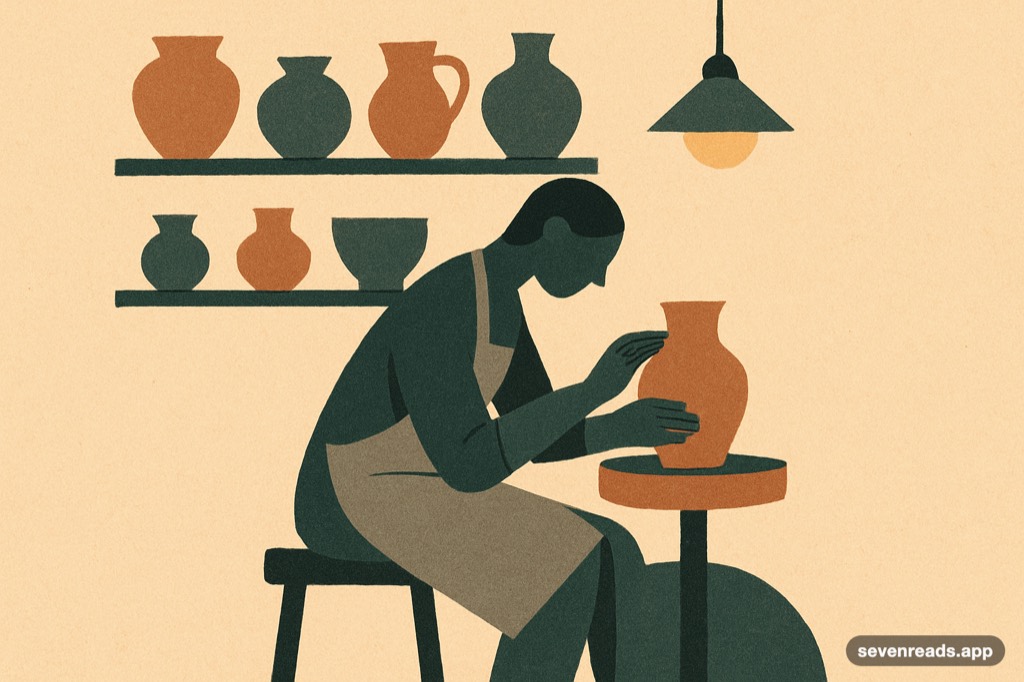
Virtue ethics is the approach to morality that starts with character rather than rules or outcomes: instead of asking "what must I do?" (duty ethics) or "what produces the best results?" (consequentialism), it asks "what would a person of good character do — and how do I become one?" Its founding text is Aristotle's Nicomachean Ethics, its central concepts are virtue as trained disposition and practical wisdom as the skill of judgment, and its modern revival reshaped moral philosophy over the last seventy years.
Here's the framework, the contrast with its rivals, and why the old approach came back.
Aristotle's Ethics — the tradition's founding text — is free in Seven Reads — start reading today.
Get Seven ReadsThe framework: character, habit, flourishing
Aristotle's architecture has three load-bearing pieces. The target is flourishing (eudaimonia) — not pleasure or success but a whole life lived well, activity in accordance with excellence. Virtues are trained dispositions (hexeis): courage, honesty, justice and generosity aren't feelings or rules but stable capacities built by practice — you become just by doing just acts, exactly as you become a builder by building. Judgment does the targeting: practical wisdom (phronesis) is the skill of perceiving what each situation calls for — the mean between failure modes, relative to you and the moment. The framework's shape is an apprenticeship: ethics as a craft learned by practice and modeling, not a code memorized.
Against the rivals: the question shifts
The contrast sharpens on any hard case. A rules approach like Kant's asks whether the act's principle universalizes; a consequentialist totals the outcomes; the virtue ethicist asks what honesty, courage and compassion — held together by judgment — would do here, and what doing it will make of the person doing it. Strengths follow: virtue ethics handles the texture rules miss (how to deliver hard truths, not just whether), keeps the agent's whole life in view, and explains moral education, which its rivals mostly presuppose. The standard objection follows too: it gives less procedural guidance — "do what the virtuous person would do" can feel circular when you need an answer at the cliff. The tradition's reply: morality genuinely is less procedural than the rivals promise, and honest theory should say so.
Why it revived
Mid-20th-century philosophers — Anscombe's 1958 broadside most famously — argued that modern moral philosophy had become rule-machinery without foundations, ignoring character, emotion and the question of what a good life is. The Aristotelian revival that followed (Foot, MacIntyre, Nussbaum and others) restored those questions to the center, and its fingerprints are now everywhere: character education, professional ethics built on practitioner virtues, positive psychology's strengths language, and the leadership literature's rediscovery that who you are shapes what you do. The revival's honest edge: it reopened arguments — which virtues, whose flourishing, what about moral luck — that the tradition itself finds generative rather than embarrassing.
Reading your way in
The tradition's advantage for readers: its founding text is a practical manual, and its claims are testable against your own habits this week. Start with the Nicomachean Ethics — lecture-note terse but navigable with help — watching for the mean, the habit thesis and the friendship books. The Stoics run a sibling program with different plumbing, and comparing the two is the fastest way to locate your own intuitions. Character, conveniently, is built the same way the books say: by practice.
Frequently asked questions
What is virtue ethics in simple terms?
The morality-of-character approach: right action is what a person of good character — courageous, honest, just, practically wise — would do, and ethics is the lifelong craft of becoming such a person through practice and habit.
How is virtue ethics different from Kant and consequentialism?
The question shifts: Kant tests the act's principle, consequentialism totals outcomes, virtue ethics evaluates the agent — what doing this makes of you, and what trained judgment perceives the situation to call for. Character versus rules versus results.
What are the main virtues in virtue ethics?
Aristotle's list includes courage, temperance, generosity, honesty, justice and friendship, crowned by practical wisdom — the judgment that aims the rest. Later traditions edit the list, which is itself one of the tradition's live arguments.
Start the apprenticeship.
The Nicomachean Ethics is free in Seven Reads — start reading today.
Get Seven Reads