What Is Transcendentalism? Emerson and Thoreau's Big Idea
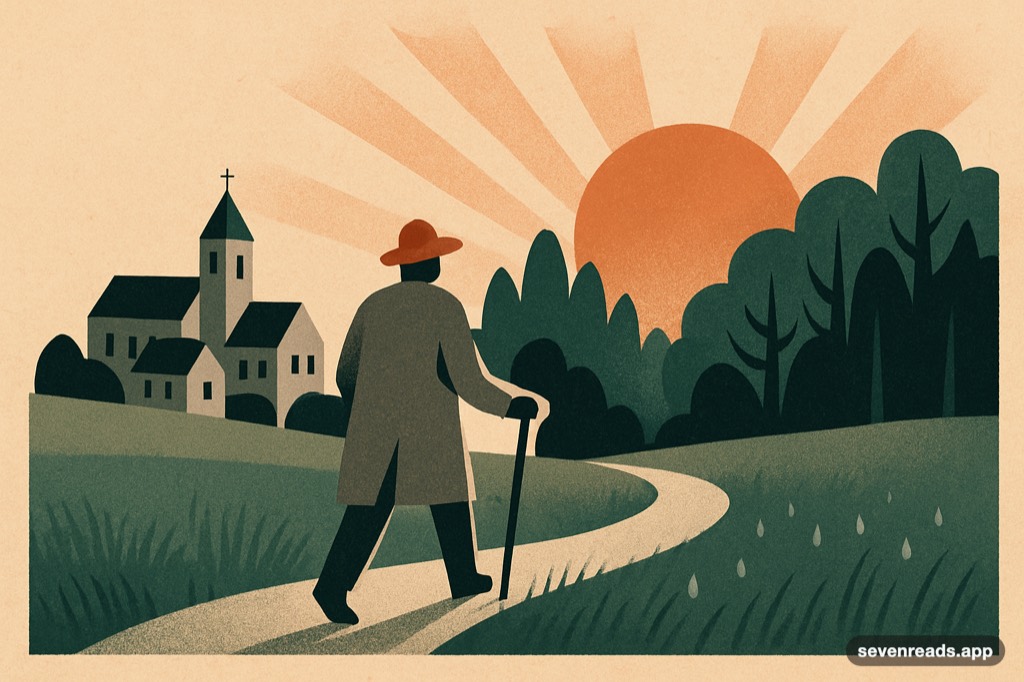
Transcendentalism was the American movement of the 1830s–40s — Emerson its voice, Thoreau its experiment — built on one conviction: that individuals have direct access to truth through intuition and conscience, prior to and above scripture, tradition and social convention. From that root grew the doctrines the culture still runs on arguments about: self-reliance, civil disobedience, nature as revelation, and the suspicion that institutions make people smaller.
Here's what the movement actually claimed, what its two great books do, and the arguments it left permanently open.
Emerson's essays and Walden are free in Seven Reads — start reading today.
Get Seven ReadsThe core claim: the inner light, secularized
The movement's name came from the idea that certain truths transcend the senses — knowledge arriving by intuition, not just experience. Practically, this cashed out as a relocation of authority: where their Puritan ancestors consulted scripture and their rationalist teachers consulted evidence, the transcendentalists consulted the individual soul, trusted as a fragment of the divine. Emerson's essays are the manifesto: institutions are the lengthened shadows of individuals; imitation is suicide; whoso would be a man must be a nonconformist. It's Protestant conscience unhooked from the church and aimed at everything — which explains both the movement's reforming energy (abolition, education, women's rights ran through its circles) and its allergy to organization of any kind, including its own.
The two great books, as method
Emerson's essays argue the doctrine; Thoreau's Walden runs the experiment — two years by the pond, testing how much of life's expense is actually living, with the famous conclusion that most people trade their days for things that don't repay them. Thoreau's other bequest, Civil Disobedience — written after a night in jail for refusing a tax that funded slavery's expansion — converts the inner-authority claim into politics: when law and conscience conflict, conscience wins, and accepting punishment publicly is how the argument is made. That essay's documented influence runs through Gandhi to the American civil-rights movement — the movement's most consequential export by far.
Nature as scripture
The third pillar: nature, for the transcendentalists, wasn't scenery or resource but text — the place where the divine reads clearest, uncorrupted by second-hand opinion. Emerson's first book made the case; Thoreau's pond enacted it; and the lineage runs directly to Muir, the national parks idea, and modern environmentalism's moral (rather than merely prudential) register. When contemporary culture treats wilderness as sacred and development as desecration, it's speaking transcendentalist, usually without the citation.
The open arguments
The movement's tensions are still live. Self-reliance versus solidarity: critics from its own era onward noted that consciences disagree, and a politics of pure individual intuition struggles to build anything shared. Nonconformity as conformity: a culture that mass-produces "be yourself" has turned the doctrine into its own opposite — a fate Emerson half-predicted. And the privilege question: Thoreau's experiment ran on borrowed land and a nearby town — which the book acknowledges more honestly than its critics allow, but the argument continues. Reading the sources settles less than it sharpens: Emerson and Thoreau are both free, short, and best read as arguments to have, not positions to inherit.
Frequently asked questions
What is transcendentalism in simple terms?
The American movement claiming individuals know truth directly through intuition and conscience — above scripture, tradition and convention. Its practical doctrines: self-reliance, nonconformity, civil disobedience, and nature as the clearest revelation.
What's the difference between Emerson and Thoreau?
Emerson argued the doctrine in essays; Thoreau tested it in practice — two years at Walden Pond and a night in jail that produced Civil Disobedience. Manifesto and experiment, respectively.
What influence did transcendentalism have?
Civil Disobedience shaped Gandhi and the civil-rights movement; the nature writings seeded environmentalism and the parks idea; and the self-reliance ethic remains American culture's default sermon — quoted most often by institutions Emerson would have told you to distrust.
Read the manifesto and the experiment.
Emerson's essays, Walden and Civil Disobedience are free in Seven Reads — start reading today.
Get Seven Reads