To the Lighthouse AI: a reading companion that never spoils it
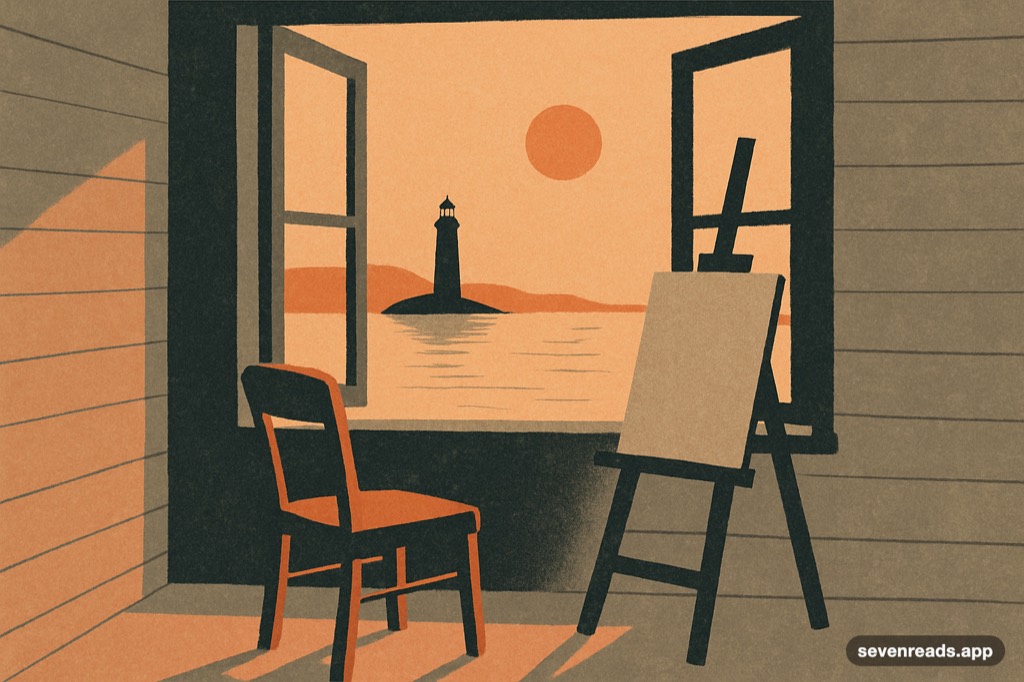
Reading To the Lighthouse with an AI companion means you can ask questions about the book — by typing or by voice — and get answers grounded in the pages you've actually read, never the ones ahead. Ten years pass in twenty pages at the book's center — the boldest structural gamble in the modern novel, with a house as protagonist and human news arriving in brackets. Around it, a family summer is rendered thought by thought, and the last section lands one of fiction's quietest devastations.
To the Lighthouse is free in Seven Reads — start reading today.
Get Seven ReadsWhat readers actually ask about To the Lighthouse
These are the kinds of questions a companion earns its keep on — asked mid-page, answered from the text you've read, without judgment and without leaks:
“Who is the main character here?”
The honest answer changes by section — Mrs Ramsay holds the first, the house holds the second, and the third belongs to the survivors and a painting. Ask at any point and a companion can trace who the narration is orbiting, from your page backward, without touching what's ahead.
“What is Lily's painting about?”
Her canvas is the book's second clock — begun in part one, finished on the last page — and it carries Woolf's whole argument about art versus loss. Ask what the painting has meant so far whenever it reappears; the answer deepens section by section.
“Why is the middle section written so strangely?”
"Time Passes" narrates from the house's point of view while history happens offstage — nights and seasons as protagonists, people in brackets. Reading it with someone to ask turns the strangest twenty pages in the canon into the reason you'll reread the book.
The spoiler problem with To the Lighthouse
What happens to this family is disclosed in single bracketed sentences inside the central section, engineered for maximum quiet shock. A synopsis hands you those brackets up front and converts the final section from devastation to footnote. This is a book to enter knowing nothing. A general chatbot has read the whole book and will eventually let that knowledge shape an answer. Seven Reads' companion is position-aware: it retrieves only from text before your bookmark, so it cannot reveal what you haven't reached — ask about the ending early and it declines, and tells you where you are instead.
How to read To the Lighthouse with Seven Reads
Add the book from the built-in store — it's one of 50,000+ public-domain classics included free — and just start reading. Highlight what strikes you, add notes when the thought arrives, and ask the companion anything the moment you wonder. When you finish, Seven writes two things: the book's overview, and a synthesis of what you noticed, built from your own notes and questions. If it's your first classic in a while, our guide to starting the classics pairs well with this book.
Frequently asked questions
Can I read To the Lighthouse for free?
Yes. To the Lighthouse is in the public domain, and a well-formatted copy is included free in Seven Reads — one tap adds it to your library, where it reads like any other book, with your position, highlights and notes kept.
Can AI discuss To the Lighthouse without spoiling it?
Only if the AI is position-aware. Seven Reads tracks exactly where you are in To the Lighthouse and answers only from the pages behind your bookmark — everything ahead is structurally excluded, so asking about the ending gets a refusal, not a leak. The brackets in Time Passes deliver the book's losses — they must not arrive early.
How long does it take to read To the Lighthouse?
Around 4 hours for most readers. At twenty minutes a day, that's roughly 2 weeks — and a streak matters more than any single sitting.
More classics to read with AI
- All 77 classics you can read with AI — the full list
- Mrs Dalloway AI — Virginia Woolf
- Ulysses AI — James Joyce
- How the no-spoilers guarantee works