Sisyphus Meaning: The Man, the Boulder, and the Point
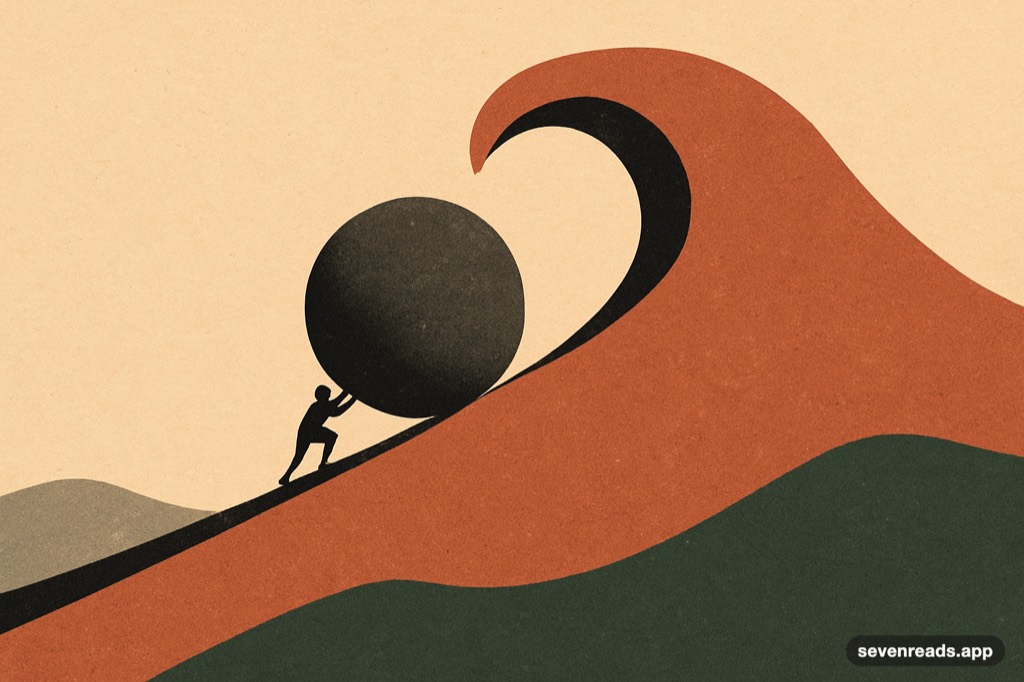
Sisyphus is the man the gods condemned to roll a boulder up a hill forever — every time he nears the top, it rolls back down, and he walks down after it. "Sisyphean" now means any labor that is endless and futile by design. But the myth is regularly told with its two best parts missing: what he did to earn the rock (he cheated death — twice), and the twentieth-century verdict that made him a hero — Camus's astonishing closing line, "one must imagine Sisyphus happy."
Here's the crime, the punishment's logic, and how a symbol of futility became a manual for living with it.
Homer and the sources are free in Seven Reads — start reading today.
Get Seven ReadsThe crime: outwitting death twice
Sisyphus, king of Corinth, was the craftiest man alive — Homer's epithet. When Death came for him, he asked to be shown how the shackles worked, and chained Death up; for days nobody on earth could die, until the gods intervened. Dying at last, he pulled the second trick: he'd instructed his wife to leave his body unburied, then persuaded the underworld's queen that he must return to punish her negligence — and simply stayed, living to old age. The boulder, when it finally came, was engineered for the specific criminal: a task that can never be finished, assigned to the man who twice refused to be finished. The gods' revenge on cleverness was a problem cleverness cannot touch.
The glimpse in Homer
Our oldest sight of him is one unforgettable frame in the Odyssey: Odysseus, visiting the dead, sees Sisyphus straining at the rock, "dust rising from his head," and the boulder — Homer gives it the only personality it needs — described as shameless, bounding back to the plain. One trickster witnessing another's eternity: the poet doesn't note the symmetry, and doesn't have to.
Camus's reversal
In The Myth of Sisyphus (1942), Albert Camus made the punished king the emblem of the human condition: we crave meaning, the universe declines to provide it, and the honest response is neither suicide nor fake consolation but revolt — full engagement without appeal. His essay's focus is the walk back down: the pause in which Sisyphus is conscious of his fate, and superior to it, because it is his. "The struggle itself toward the heights is enough to fill a man's heart. One must imagine Sisyphus happy." The reversal keeps the myth's honesty (the rock will roll back; Camus concedes everything) and relocates the meaning from the summit to the pusher. Whether that's wisdom or defiance wearing wisdom's coat is a live argument — the Stoics got somewhere similar by other roads — but it permanently changed what the name means.
Using "Sisyphean" precisely
The word wants three conditions: the task restarts (not merely long), completion is structurally impossible (not merely hard), and the laborer must continue anyway. Inbox zero is Sisyphean; a dissertation is just long. Used well, the word smuggles in the modern question every time: given the rock — and everyone has one — is the right response despair, or Camus's scandalous happiness? The myth has become a mirror; which is a strange promotion for history's most famous punishment.
Frequently asked questions
What was Sisyphus punished for?
Cheating death twice — chaining up Death himself so no one could die, then talking his way out of the underworld and living to old age. The endless boulder was designed as the one task trickery can't beat.
What does Sisyphean mean?
Endless and futile by design: a task that restarts every time it nears completion yet must be continued. It's from the boulder that always rolls back just before the summit.
Why does Camus say Sisyphus is happy?
In The Myth of Sisyphus, Camus argues the rock is ours regardless — and that consciousness of an absurd fate, plus full engagement without false hope, is a form of victory: "the struggle itself toward the heights is enough to fill a man's heart."
Meet him in the underworld.
The Odyssey — with the oldest glimpse of the boulder — is free in Seven Reads — start reading today.
Get Seven Reads