Project Gutenberg: The Complete Guide
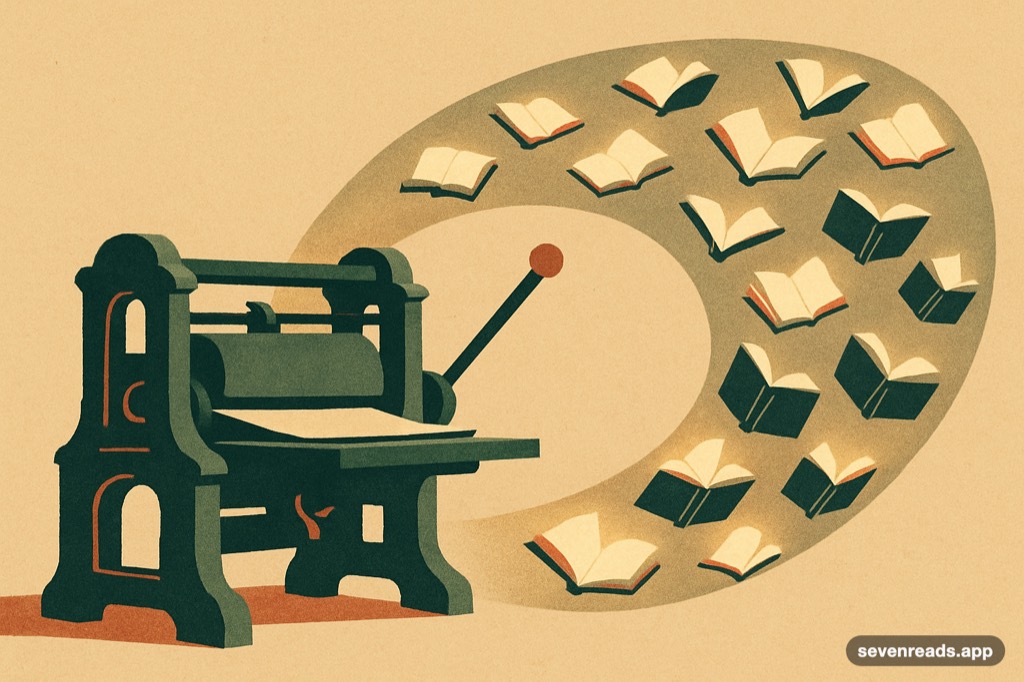
Project Gutenberg is the oldest digital library — founded in 1971, before the web existed — and holds over 75,000 free books: the entire out-of-copyright canon, digitized by volunteers and given away on principle. It is also, honestly, a 1990s-shaped website wrapped around a priceless collection, which is why knowing how to use it (and when to use friendlier front-ends) separates the readers who mine it from the visitors who bounce.
Here's what's inside, how to work the catalog, the quality facts worth knowing, and the modern routes into the same books.
Seven Reads wraps Gutenberg's library in a modern reader — search, tap, read, ask.
Get Seven ReadsWhat's actually in there
The collection is the pre-1930 written world: every major novelist from Austen through the early moderns, philosophy from Plato to Nietzsche, the poets, the histories, the scriptures in classic translations, plus the vast strange long tail — Victorian cookbooks, expedition journals, forgotten bestsellers. English dominates (50,000+ titles) with substantial French, German and more. What's not there: anything still copyrighted (US-published 1930 onward, with yearly expansion), and — worth knowing — modern translations: Gutenberg's Homer and Tolstoy are the classic public-domain renderings, excellent and period-flavored, not this decade's celebrated versions.
Working the catalog
Search tactics that pay: search by author surname rather than title (titles vary across editions — the Gita appears under its translator's framing, scripture under scholarly names); use the "Popular" and subject-bookshelf listings to surface the good stuff in unfamiliar territory; and when multiple editions of a work exist, the one with the higher download count is usually the better-formatted choice. Downloads: EPUB with images is the right pick for phone and reader apps (EPUB beats PDF on phones decisively); plain text is for tinkerers; the online HTML reader works for sampling before committing.
The quality facts, honestly
Volunteer digitization across five decades produces variance worth knowing about. The famous titles are excellent — proofread repeatedly, cleanly structured. Deeper cuts occasionally carry scanning-era artifacts: stray characters, hyphenation seams, sparse metadata, and covers that are generated placeholders rather than art. None of it is disqualifying (errors are rare per page even in rough files), but expectations calibrated beat surprise. Two structural quirks: chapter navigation quality varies with the transcription's age, and — a genuine Gutenberg charm — many books include the original edition's front matter, ads and all, which is time travel nobody asked for and everyone enjoys.
The modern routes in
You don't have to use the 1990s website: Gutenberg's collection is open, so modern readers build on top of it. Standard Ebooks hand-re-typesets a curated slice with beautiful covers and cleaned text — the connoisseur's route for its few hundred titles. And reading apps integrate the catalog directly: Seven Reads bakes in a curated 250-classic shelf with real cover art plus live search across the full English collection — tap a result and it's in your library, formatted, covered, position-synced, with a grounded companion attached. The library Gutenberg's volunteers spent fifty years building deserves a reader built this decade; either route gets you one.
Frequently asked questions
Is Project Gutenberg completely free and legal?
Yes — every book's US copyright has expired, and the project verifies rights before publishing. Download, keep and share freely; donations fund the infrastructure, not the books.
What format should I download from Project Gutenberg?
EPUB (with images) for phones, tablets and reader apps — it reflows properly everywhere. Plain text suits processing and tinkering; the site's HTML reader is fine for sampling.
Why do some Gutenberg books look rough?
Five decades of volunteer digitization: famous titles are polished, deep cuts can carry scan artifacts and placeholder covers. Standard Ebooks re-typesets a curated slice, and modern reader apps repair covers and metadata automatically.
Fifty years of digitizing, two minutes to reading.
Seven Reads puts Gutenberg's canon behind modern search, real covers and a spoiler-safe companion — the collection at its best.
Get Seven Reads