Oedipus Complex Meaning: What Freud Took From Sophocles
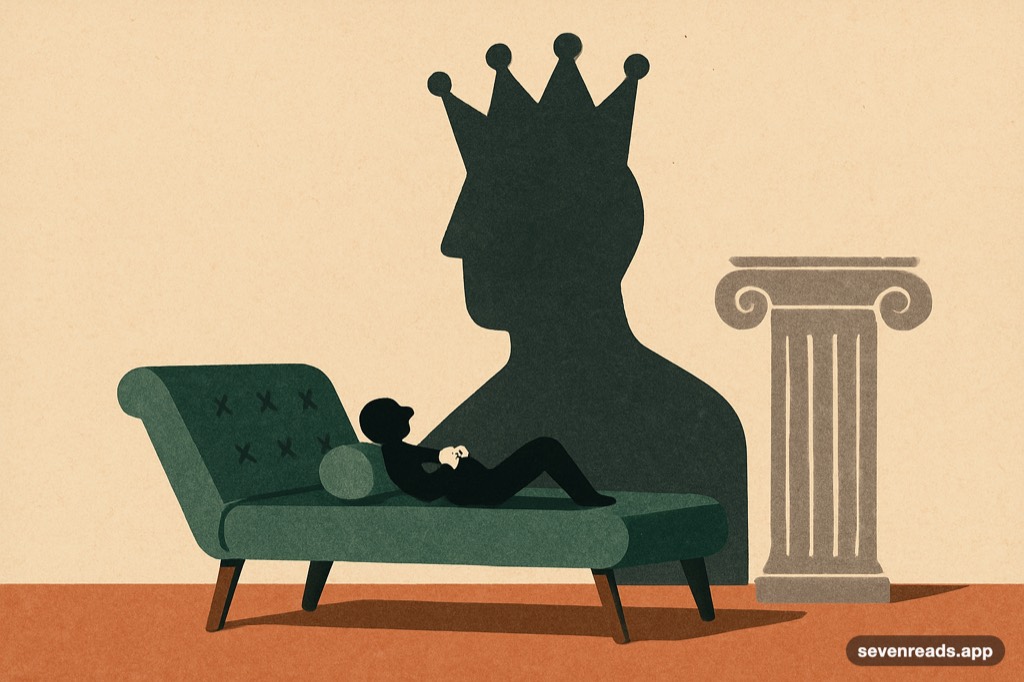
The Oedipus complex is Sigmund Freud's name for a pattern he claimed was universal in early childhood: desire for the opposite-sex parent and rivalrous hostility toward the same-sex one, normally outgrown, pathological when it isn't. He announced it in 1899 and named it for Sophocles's King Oedipus, who killed his father and married his mother. The irony built into the name is famous among classicists: the literary Oedipus did both unknowingly and spent the play desperately trying not to — he's the last man in literature you'd accuse of the wish.
Here's what Freud actually claimed, why the play meant something different, and what survives of the idea today.
Sophocles and the sources are free in Seven Reads — start reading today.
Get Seven ReadsFreud's actual claim
In The Interpretation of Dreams, Freud argued that Sophocles's play grips audiences across millennia because it stages a universal buried wish: "his fate moves us only because it might have been ours." The child, on his account, passes through a phase of desiring the mother and resenting the father's claim on her; healthy development dissolves the complex through identification — the boy resolves to become like the rival rather than defeat him — and conscience is founded in that surrender. The complex, for Freud, wasn't a curiosity; he called it the nucleus of the neuroses and the origin of morality, religion, and law. Few single ideas have claimed more.
What the play actually says
Sophocles's Oedipus Rex is not about forbidden desire; it's about knowledge and fate. The oracle's prophecy precedes Oedipus's birth; every step he takes to escape it — fleeing the parents he wrongly believes are his — walks him into it. The play's engine is his relentless investigation of a crime that turns out to be himself, and its great theme is the tragic gap between what a man does and what he knows he's doing. Freud needed the audience's shudder to be recognition of their own wish; the classical reading says the shudder is at fate's machinery — that a man doing everything right can be doing everything wrong. Both readings can't own the play, which hasn't stopped either from trying for a century.
What survived the critics
As literal doctrine, the complex has fared badly — anthropologists found family dramas that don't fit it, and modern developmental psychology treats it as unfalsifiable storytelling. What survives is looser and durable: that early family triangles pattern later love and rivalry; that identification with a rival is a real mechanism (visible to anyone watching a boy imitate the father he's competing with); and that literature keeps generating the material — Hamlet's paralysis around his mother's remarriage was Freud's own second exhibit, and the brothers of Karamazov, orbiting a vile father one of them will be accused of killing, stage the rivalry at full operatic scale.
Reading it now
Read the play first and Freud second — in that order the theory becomes a fascinating misreading rather than a lens you can't remove. Ninety minutes for Sophocles; one chapter of The Interpretation of Dreams for Freud's version. The gap between them is one of the best short courses available in how ideas colonize texts.
Frequently asked questions
What is the Oedipus complex in simple terms?
Freud's claim that young children pass through a phase of desire for the opposite-sex parent and rivalry with the same-sex one — normally resolved by coming to identify with the rival parent, which Freud saw as the root of conscience.
Did Oedipus actually have an Oedipus complex?
No — in Sophocles's play he kills his father and marries his mother unknowingly, and the plot is his horrified investigation of the truth. Classicists have always noted the name misreads the play it honors.
Is the Oedipus complex still accepted?
Not as literal universal doctrine — it's widely viewed as unfalsifiable, and cross-cultural evidence undermined it. What survives is the broader insight that early family dynamics pattern later attachments and rivalries.
The play, then the theory.
Sophocles and The Brothers Karamazov are free in Seven Reads — start reading today.
Get Seven Reads