Nihilism Meaning: The Belief in Nothing, Explained
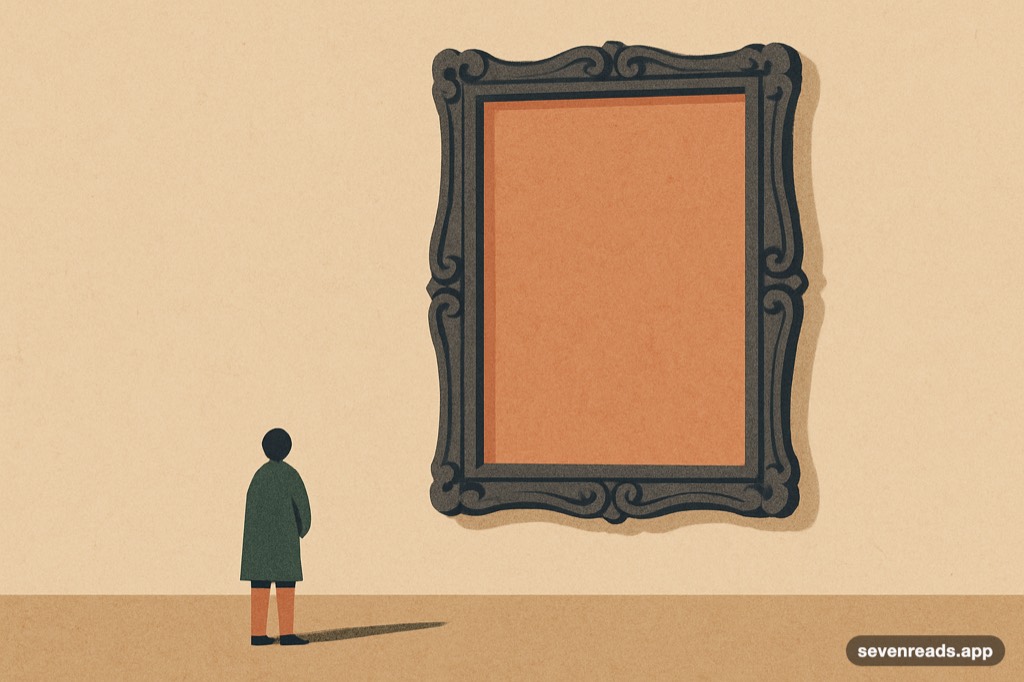
Nihilism — from Latin nihil, "nothing" — is the position that life has no inherent meaning, value, or purpose: nothing matters, nothing is commanded, nothing is owed. The word covers a family of claims (about morality, knowledge, existence itself), and its cultural career runs through two great channels: the Russian novel that made "nihilist" a movement's name, and the German philosopher who diagnosed nihilism as Europe's oncoming crisis — and spent his life engineering an escape from it.
Here's the word's history, its actual varieties, and the two literary responses that still frame the argument.
Dostoevsky and Nietzsche are free in Seven Reads — start reading today.
Get Seven ReadsThe word's Russian debut
Turgenev's Fathers and Sons (1862) put the word into circulation through Bazarov — the young medical materialist who "does not bow before any authority, does not take any principle on faith." Russia's radical youth adopted the label as a badge: down with tradition, religion, aesthetics; only science and utility survive scrutiny. Dostoevsky spent the rest of his career answering — Notes from the Underground attacks the rational-utopian half, and The Brothers Karamazov stages the moral half in Ivan's formula "if God does not exist, everything is permitted," then runs the experiment to its wreckage. The Russian channel gave nihilism its flavor of youth, rebellion and danger.
Nietzsche's diagnosis
Nietzsche used the word differently — not a creed to adopt but a condition to survive. "God is dead" was his report that Europe's foundation of values had collapsed while its habits kept running; nihilism is the in-between state where the old meanings are unbelievable and no new ones exist. His taxonomy still organizes the debate: passive nihilism (exhausted resignation — the "last man's" comfort) versus active nihilism (demolition that clears ground for creation). His escape route — the self-created values of the Übermensch — is philosophy's most famous attempt to go through nihilism rather than around it. Read him carefully and he's the arsonist and the fire brigade at once.
The varieties, sorted
Precision helps, because the word covers distinct claims. Existential nihilism: life has no inherent meaning (the common usage). Moral nihilism: no objective right and wrong. Epistemological: no knowledge is possible. Each has different arguments and different stakes — and note what none of them asserts: that you should despair. Camus's absurdism (his Sisyphus is the modern classic here) accepts the meaningless universe and rejects the despairing conclusion; existentialism answers with created meaning; religious traditions deny the premise. "Nihilist" as an insult usually just means "person whose values I can't see" — the technical senses are more interesting.
Why the word is everywhere now
Every generation that watches an old value-structure lose its grip reaches for the vocabulary, which is why the word spikes in anxious decades. The classics' standing offer is that this exact crisis has been thought through before, at full depth, twice — once in Russian with a murder plot, once in German with a hammer — and both are on the shelf. Reading them beats inheriting the conclusion secondhand.
Frequently asked questions
What does nihilism mean in simple terms?
The view that life has no built-in meaning, value or purpose — from Latin nihil, "nothing." Varieties target morality (no objective right/wrong) or knowledge (nothing knowable) specifically.
Was Nietzsche a nihilist?
He's the great diagnostician of nihilism, not its advocate — he saw Europe's values collapsing and spent his career engineering a way through: the self-created values of the Übermensch. He wanted to overcome nihilism, not preach it.
What is the difference between nihilism and existentialism?
Both start from a universe without built-in meaning. Nihilism stops there; existentialism answers that meaning can be created — Camus's absurdism adds that the creating is done in full view of the meaninglessness, happily.
The crisis, thought through twice.
Dostoevsky, Nietzsche and the sources are free in Seven Reads — start reading today.
Get Seven Reads