Motif Meaning: The Repetition That Builds Meaning
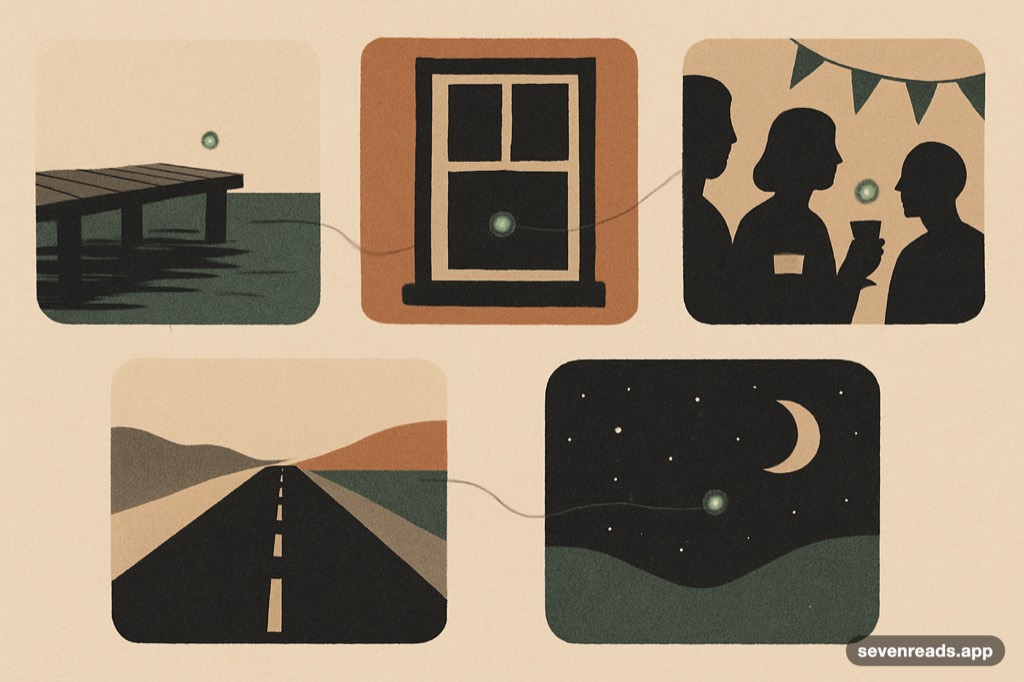
A motif is a recurring element in a work — an image, phrase, object, sound, or situation that keeps coming back, gathering meaning with each return. The word came through music (Wagner's leitmotifs — themes attached to characters, sounding whenever they near) and French decorative arts (a repeating pattern-unit), and both origins survive in the literary sense: a motif is pattern and announcement, the thing whose reappearance you learn to feel as significant. The crucial distinction — motif versus theme versus symbol — is genuinely simple once said plainly, and the famous green light will demonstrate.
Here's the sorting, the mechanics of accumulation, and how to track motifs without turning reading into homework.
The motif masterworks are free in Seven Reads — start reading today.
Get Seven ReadsMotif vs. theme vs. symbol, settled
A theme is an idea a work explores (ambition, memory, class) — abstract, stateable, never directly on the page. A symbol is a concrete thing standing for something beyond itself, and can appear once (the scarlet letter is a symbol on page one). A motif is defined by recurrence: it's the repeating concrete element — which usually serves a theme, and often becomes a symbol through its repetitions. Weather recurring at every plot turn: motif. What the storms come to stand for: symbol. What the book is saying about fate: theme. The three answers to "what do I write about?" in every literature class are just: the pattern, the pattern's meaning, the idea both serve.
The demonstration: a light across the water
Gatsby's green light is the textbook case because you can watch it accumulate in real time across a short book: first appearance — an unexplained gesture toward a light across the bay (pure image); middle — identified, attached to a person and a longing (image becoming symbol via repetition); last page — expanded into the book's final sentences about everyone's receding future (motif graduated to theme-carrier). No single appearance does the work; the spacing does. That's the mechanism in general: a motif is a savings account — each recurrence deposits context, and the late appearances spend the accumulated balance. It's why motifs reward rereading and why spoiling one (telling you now what the light "means") genuinely subtracts: the meaning is the accumulation.
The masters of the device
Melville runs whiteness through Moby-Dick until a whole chapter erupts trying to say what the color has come to carry. Dickens threads fog, prisons and doubles. Wagner's leitmotif system — the sword-theme sounding before anyone mentions the sword — was imported wholesale into film scoring, where you've been trained by motifs your whole viewing life (two notes mean shark). Kundera built essays into novels on the device. The technique's universality has one root: repetition is how anything acquires meaning — ritual, habit, chorus — and the motif is simply that law, hired by art.
Reading for motifs, lightly
The practical skill isn't cataloguing; it's noticing the second time. Once is detail; twice is a candidate; the third appearance is the work telling you to watch. Mark recurrences as they happen (a highlight and a one-word note suffices — this is precisely what marginalia are for), and ask what changed between appearances, because motifs mean by variation: the light seen with company versus alone, the storm before versus after. The question "what does the motif mean" is usually premature until the last recurrence — which is the honest reason to finish books.
Frequently asked questions
What does motif mean in literature?
A recurring concrete element — image, phrase, object, situation — whose repetitions accumulate meaning across a work: Gatsby's green light, Moby-Dick's whiteness, fog in Dickens.
What is the difference between a motif and a theme?
A theme is the abstract idea explored (longing, ambition); a motif is the concrete recurring element that carries it (the green light). Motifs are on the page; themes are what the patterns add up to.
How do you identify a motif?
Notice the second appearance — once is detail, twice is a candidate, three times is the work signaling. Then track what varies between recurrences; motifs mean through variation and accumulation.
Watch the pattern pay off.
Gatsby and Moby-Dick are free in Seven Reads — start reading today.
Get Seven ReadsMore big ideas, explained
- Big Ideas from the Classics: Every Concept, Explained — the pillar guide
- The Great Gatsby AI
- Moby-Dick AI