How to Read More Books (Without Reading Faster)
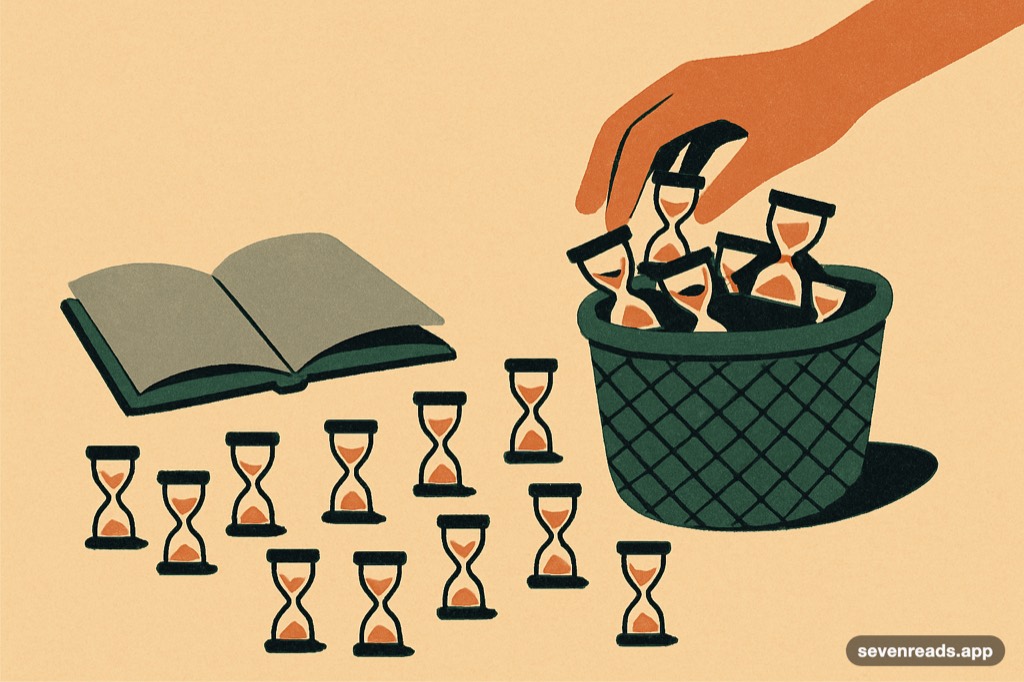
Reading more books is almost never a speed problem — it's a time-capture problem and a momentum problem. The hours exist: they hide in fragments (queues, commutes, the fifteen minutes before sleep) and they leak through friction (books left elsewhere, places lost, restarts unpaid). Capture the fragments, protect the momentum, and page count rises forty percent with zero change in reading speed — which is good, because speed itself doesn't scale honestly.
Here's where the time actually is, and the mechanics that convert it.
Your whole library, place kept, in your pocket — Seven Reads captures the hidden minutes.
Get Seven ReadsCapture the fragments
Track a normal week and the found time is startling: ten minutes waiting here, twelve in transit there, eight before an appointment — routinely forty-plus fragmented minutes a day, currently absorbed by feeds. Fragments are useless for deep work but perfect for reading if re-entry is instant: book always present (the phone you're already holding), place always kept, no setup cost. A reader who converts half their fragments adds two books a month without touching their schedule. The catch is friction: every tap between impulse and page loses conversions, which is why the library-in-pocket with position sync isn't convenience — it's the whole capture mechanism.
Protect the momentum
Books are finished on momentum and abandoned in stalls. The three stall-killers: re-entry tax — returning after a gap to characters you've forgotten (fix: a recap of exactly what you've read, which converts the restart from re-reading to resuming); confusion carried — comprehension debt compounding until the book feels like work (fix: ask at the moment of stuckness rather than pushing through fog); and the dutiful slog — a mismatched book blocking the queue (fix: quit freely; the habit outranks any title). Momentum protected, the same reading speed finishes dramatically more books, because abandonment — not pace — is where most reading years are lost.
Run parallel books, deliberately
Contrary to single-book orthodoxy: two or three concurrent books — different registers, matched to different moments — increase total throughput. A demanding book for fresh-mind sessions, a propulsive one for tired evenings, perhaps an essay collection for fragments: energy states vary, and a queue that matches them means there's always a right book, so no moment is lost to "not feeling like it." The boundary: parallel books work when each gets regular contact; six dormant bookmarks is not parallelism but a graveyard.
Let the count take care of itself
The paradox of reading more: obsessing over the number produces short-book gaming and skimming — the wrong question wearing a metric — while capturing minutes and protecting momentum produces the number as a side effect. Measure time-in-pages if you measure anything (a streak of daily minutes is the honest metric); the books-per-year figure will follow, and it will be made of books actually read.
Frequently asked questions
How can I read more books without more free time?
Capture the fragments you already have — queues, transit, pre-sleep minutes routinely total 40+ daily — by keeping your library in your pocket with your place held. Converting half of them adds roughly two books a month.
Is it better to read one book at a time or several?
Two or three in different registers usually beats one: matching book to energy state means no session is lost to mismatch. The limit is contact — every open book needs regular touches, or it's just an abandonment in progress.
Why do I start books but never finish them?
Usually stalled momentum: a gap created re-entry cost, or carried confusion made the book feel like work. Recaps on return and asking at the point of stuckness fix most of it; quitting mismatched books without guilt fixes the rest.
Convert this week's hidden minutes.
Seven Reads keeps every book at hand, recaps on return, and answers the stuck moments — the momentum machinery, in your pocket.
Get Seven Reads