The Hero's Journey, Traced Through the Odyssey
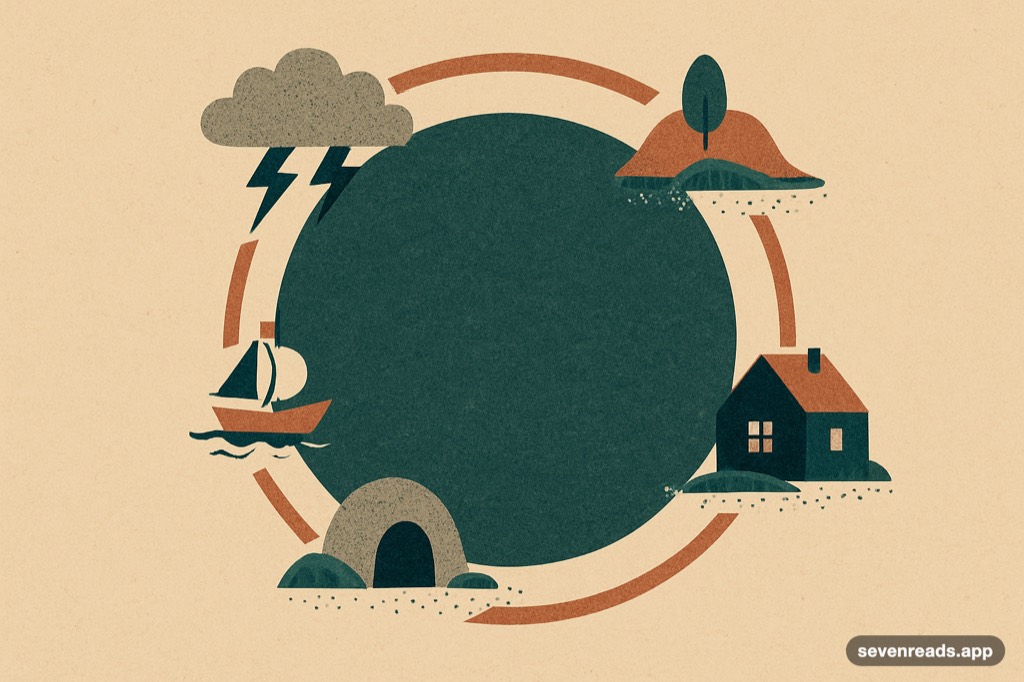
The hero's journey — the story template of departure, initiation and return that Joseph Campbell distilled and Hollywood industrialized — maps onto the Odyssey beautifully, which is no accident: Homer's poem is one of the oldest sources the template was built from. But run the mapping honestly, stage by stage, and something more interesting appears: the Odyssey keeps deviating from the pattern in ways that expose what the template flattens — and the deviations are where the poem is greatest.
Here's the map, the fits, and the productive misfits.
The Odyssey is free in Seven Reads — start reading today.
Get Seven ReadsThe clean fits
Several stages align almost suspiciously well. The call and departure: Odysseus leaves Ithaca for Troy (though the poem starts long after — see below). Supernatural aid: Athena is the template's divine mentor at full strength, intervening from the first book. The road of trials: Cyclops, Circe, Sirens, Scylla — the initiation gauntlet in its original packaging. The descent: Odysseus literally visits the dead, the template's "belly of the whale" rendered as underworld consultation. The return with transformation: home, tested, in disguise, to a household that must be won back. If you learned the journey from screenwriting books, reading the Odyssey feels like visiting the quarry the stones came from.
The productive misfits
Now the deviations. The poem starts in the middle — with the hero absent for four books while his son searches — which the template has no slot for; Homer's interest in the hole a hero leaves is un-Campbellian and profound. The famous trials arrive as after-dinner narration by Odysseus himself, an unreliable performer angling for gifts — the template assumes the journey happened as told; the poem quietly asks who profits from the telling. The return dominates: nearly half the poem is the slow, tactical reclamation of home — recognition scenes, loyalty tests, patience — where the template treats return as a closing beat. And the transformation is ambiguous: the man who lands on Ithaca lies to everyone, including the goddess who loves him, and the poem lets you wonder whether the journey refined him or refined his mask.
What the comparison teaches about templates
The exercise cuts both ways. The template earns its keep: it explains the poem's durable grip and gives first-time readers a scaffold — genuinely useful on a 3,000-year-old text. But the greatness lives in the excess: the son's coming-of-age, the wife whose cunning matches her husband's (Penelope's loom and her bed-test are heroism the template can't see), the servant recognized by a scar, the dog. A template names what stories share; literature is what a particular story does beyond its template. Reading the Odyssey with the map in one hand — fitting and failing it stage by stage — is one of the best available lessons in how stories actually work.
Frequently asked questions
Does the Odyssey follow the hero's journey?
Substantially — departure, trials, descent to the dead, and transformed return all appear, partly because the poem is a source the template was distilled from. But it deviates tellingly: a delayed hero, trials told by an unreliable narrator, and a return that takes half the poem.
What are the hero's journey stages in the Odyssey?
Call and departure (Troy), supernatural aid (Athena), road of trials (Cyclops through Scylla), the descent (the underworld), and return with tests and recognition (Ithaca). The poem's structure reorders them — beginning in the middle, with the trials in flashback.
Where does the template fail the poem?
Everywhere the poem is most interesting: Telemachus's coming-of-age, Penelope's parallel cunning, the possibility that Odysseus's adventure tales are performance. Templates catch what stories share; the misfits are the literature.