Dracula or Frankenstein: Which Should You Read First?
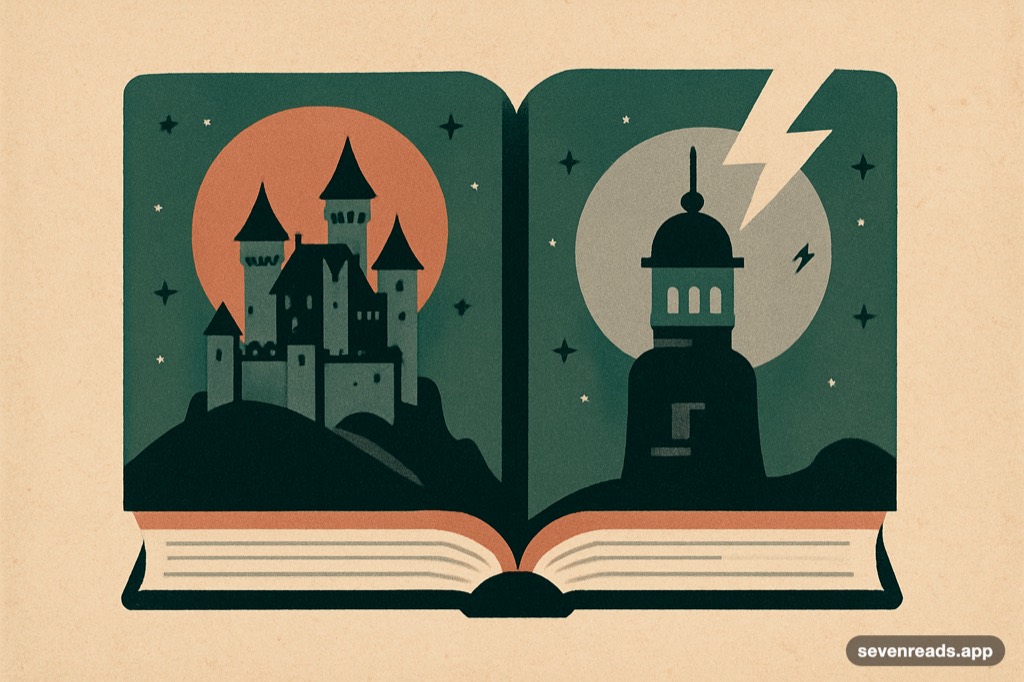
Read Frankenstein first — at 5 hours it's half of Dracula's length and the deeper book, a grief-and-responsibility tragedy that also founded science fiction. Then read Dracula as the reward: the propulsive one, a tech-thriller of its day told in diaries and telegrams. Both books are nothing like their movies, and in both cases the book is stranger and better.
Here's what each actually is, and which door fits which reader.
Both are free in Seven Reads — start reading today.
Get Seven ReadsForget the movies first
The cultural versions are the barrier here. Movie Frankenstein is a lurching mute with bolts; Shelley's creature is eloquent — he reads Paradise Lost and argues his case so well that readers switch sides mid-book. Movie Dracula is a seductive aristocrat center-stage; Stoker's counts almost no pages on screen, and the novel belongs to the team hunting him with train timetables, typewriters and blood transfusions — the era's cutting edge against the ancient thing. Both books read as discoveries precisely because the adaptations spoiled a version that isn't there.
The case for Frankenstein first
It's short, it's structurally elegant (three nested narrators, like Russian dolls of testimony), and its question — what does a creator owe the thing he made? — is the one the whole genre has been re-asking since. A nineteen-year-old invented science fiction with it in 1818. The famous central section, where the creature narrates his own education in being hated, is the emotional peak of gothic fiction, and it lands best when you meet it before vampire-hunting sets your expectations to adventure.
The case for Dracula first
Momentum. The epistolary form makes it a found-footage film on paper — every diary entry written by someone who doesn't know what the reader knows, which generates dread by pure structure. Jonathan Harker's opening month in the castle is among the best sustained sequences in horror. If your goal is to enjoy a classic rather than be moved by one — a first classic after a reading drought, say — the 11-hour ride is the safer bet, and Frankenstein makes a fine, short second course.
Reading them as a pair
Together they bracket the century: 1818's creature is science's orphan, 1897's vampire is superstition invading the age of science — the fear flipped polarity in eighty years. Both are built from documents and testimonies rather than an all-seeing narrator, which makes "can I trust this account?" a live question worth asking in each. Sixteen hours combined buys both pillars of gothic fiction.
Frequently asked questions
Is Frankenstein or Dracula a better book?
Frankenstein is generally the deeper, more moving book; Dracula is the more entertaining page-turner. At 5 hours against 11, Frankenstein-first is the efficient order for most readers.
Is Dracula scary to read today?
The castle chapters still genuinely unsettle — the dread comes from structure, not gore, since every narrator knows less than you do. It reads as suspense rather than horror by modern standards.
Is Frankenstein really science fiction?
Yes — it's widely counted the first science fiction novel: a scientific premise pursued to its human consequences, published in 1818 when Mary Shelley was twenty.
Both pillars, sixteen hours.
Frankenstein and Dracula are free in Seven Reads — start reading today.
Get Seven Reads