Devil's Advocate Meaning: The Church Job Behind the Phrase
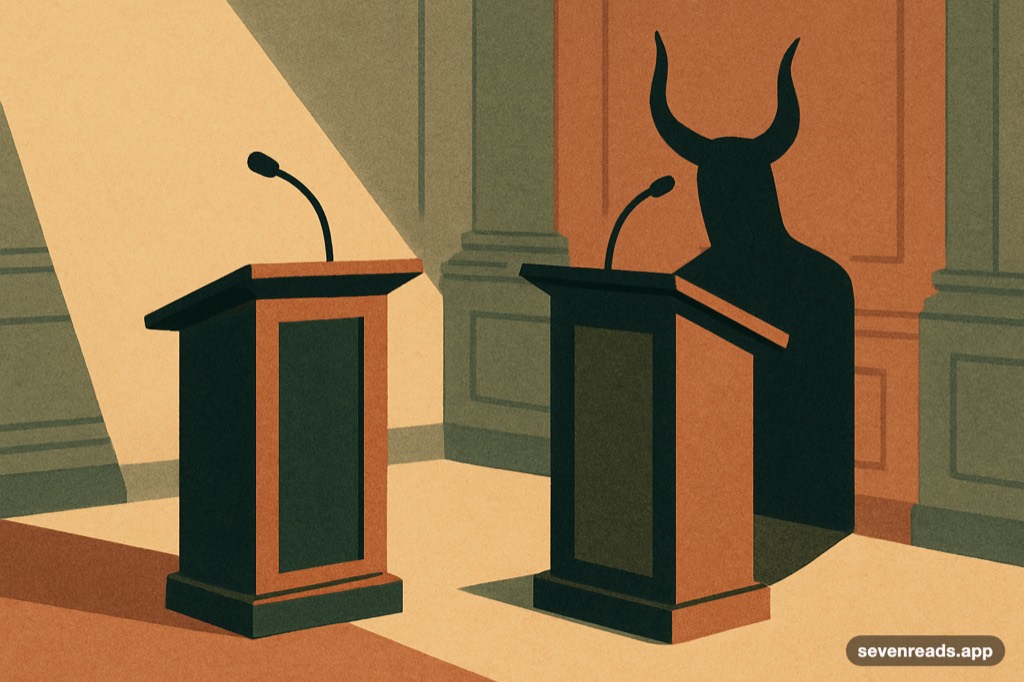
To play devil's advocate is to argue a position you don't hold — deliberately, to test the case, stress the evidence, or force the room to defend what it was about to assume. The phrase was a real job: the advocatus diaboli, a Vatican office formalized in 1587, whose holder's duty in canonization proceedings was to argue against the candidate for sainthood — probing the miracles, attacking the evidence, making the case for heaven's admission committee that this soul should not get in. The Church, in other words, institutionalized the insight that every claim deserves a paid opponent.
Here's the office, why it was invented, and the rules that separate honest devil's advocacy from its annoying impostor.
The argument classics are free in Seven Reads — start reading today.
Get Seven ReadsThe office of holy opposition
Formally the Promoter of the Faith, the devil's advocate examined every canonization case adversarially: were the miracles medically inexplicable or just undocumented? Was the sanctity real or reputation? For four centuries no one became a saint without their case surviving a professional attack. The office's logic is the deep part: the Church wanted its saints certified, and certification requires an opponent — a case that has never been argued against has never been tested. (John Paul II drastically curtailed the role in 1983; canonizations promptly accelerated, which both sides of that reform cite happily.) The phrase kept the function when it left the building: someone must make the case nobody in the room believes, precisely because nobody in the room believes it.
Why groups need one
The office answers a permanent failure mode: agreement compounds. Rooms converge; dissent gets expensive; and the case for the popular conclusion is never load-tested because loading it feels rude. The Socratic method is the same machine in dialogue form — Socrates professionally attacking definitions their holders had never defended — and the Republic only gets airborne because Glaucon volunteers to make injustice's case as strongly as possible, explicitly not believing it: history's most consequential devil's advocacy, since Plato's whole answer exists because someone stated the problem at full strength. Modern versions — red teams, dissent channels, pre-mortems — are the advocatus diaboli in business casual.
The honest rules — and the impostor
Real devil's advocacy has a contract: it's declared ("let me play devil's advocate"), it's in service of the group's conclusion (the attack aims to strengthen or kill the case, not the people), and it ends — the advocate yields when the case survives. The impostor violates all three: the contrarian who launders real hostility through "just playing devil's advocate," attacks without stakes, and never concedes. The tell is what happens when the argument is answered — the honest advocate is satisfied; the impostor switches attacks. The phrase deserves defending from its abusers, because the function is irreplaceable: as the canonization lawyers knew, a belief that has never survived opposition isn't a tested belief. It's a hope with seniority.
Using the phrase
Declare the role before using it — the phrase exists precisely to license opposition without enmity. And accept the role's discipline when it's your case being tested: the devil's advocate across the table is, by the office's original logic, the best friend your conclusion has. Saints required one; your product launch can survive one too.
Frequently asked questions
What does playing devil's advocate mean?
Arguing a side you don't actually hold, declared openly, to stress-test a case or force a room to defend its assumption. The attack serves the conclusion, not the arguer's ego.
Was devil's advocate a real job?
Yes — the Vatican's advocatus diaboli (formalized 1587) argued against every sainthood candidate, probing miracles and evidence. The office was drastically curtailed in 1983.
How is devil's advocacy different from being contrarian?
The contract: real advocacy is declared, serves the group's conclusion, and ends when the case survives. The contrarian hides hostility behind the phrase, argues without stakes, and never yields.
Every belief deserves a stress test.
Plato's dialogues — the original opposition drills — are free in Seven Reads — start reading today.
Get Seven Reads