Carpe Diem Meaning: What Horace Actually Wrote
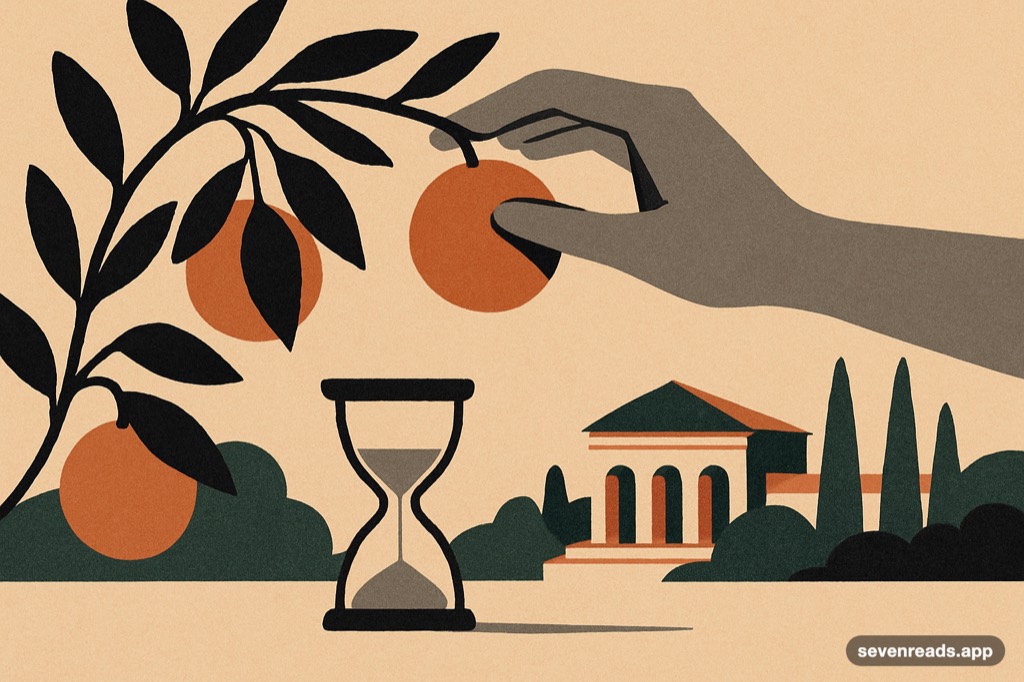
Carpe diem is usually translated "seize the day," but Horace's verb is gentler and better: carpe means "pluck," the way you pick ripe fruit. And the phrase almost never travels with its other half. The full line, from the Odes, book one, poem eleven (23 BC), is carpe diem, quam minimum credula postero — "pluck the day, trusting the next one as little as possible." It isn't a pep talk. It's advice from a poem about death, addressed to a woman anxiously consulting fortune-tellers, and the advice is: stop asking how long you have.
Here's the original context, how "seize" bent the meaning, and the two ancient philosophies hiding inside the phrase.
The Stoics and Epicureans are free in Seven Reads — start reading today.
Get Seven ReadsThe poem it comes from
The ode is eight lines. Horace tells Leuconoë to quit reading Babylonian horoscopes: whether Jupiter grants many winters or this one is the last, "be wise, strain the wine, and cut back long hope into a small space. Even while we speak, envious time has fled." Then the famous words. The imagery is domestic — wine to filter, a day to pick like fruit — and the scale is deliberately small. Horace's cure for anxiety about the future isn't grand ambition; it's the next few hours, done well.
"Pluck," not "seize"
The mistranslation matters. "Seize" suggests conquest — bucket lists, big risks, grabbing life by the collar. Carpe is a harvest word: what's ripe is already here and needs only to be gathered. On Horace's reading, the person frantically maximizing experiences is making Leuconoë's mistake in a new costume — still living in the future, still trusting tomorrow. The phrase's actual claim is quieter and harder: today is not preparation. It's the crop.
The philosophy inside it
Horace was fluent in both Greek schools and the ode blends them. From Epicurus: pleasure rightly understood is modest — wine, friends, freedom from anxiety — and fear of the future is the great thief of it. From the Stoics: the future is not in your control, so trusting it is a category error. The same blend animates memento mori, the phrase's dark twin: remember death, therefore pluck the day. The two sayings are one thought with the lens rotated — mortality as the reason for presence. (Marcus Aurelius runs the identical argument in Meditations: "you could leave life right now — let that determine what you do and say.")
Its long afterlife
The phrase resurfaces wherever poetry argues against postponement: Herrick's "Gather ye rosebuds while ye may" (a straight translation of the harvest image), Marvell's "To His Coy Mistress" (carpe diem as seduction logic), and the modern classroom-desk version popularized by Dead Poets Society. Each age rewrites it in its own key — erotic, defiant, motivational — and Horace's original stays the most radical, because it's the only version with no agenda for your day beyond the day itself.
Frequently asked questions
What does carpe diem literally mean?
"Pluck the day" — carpe is a harvest verb, used for picking fruit. "Seize the day" is the common translation but adds an aggression Horace didn't write.
What is the full carpe diem quote?
Carpe diem, quam minimum credula postero — "pluck the day, trusting the next one as little as possible." It closes Horace's short ode telling a friend to stop consulting fortune-tellers about the future.
Is carpe diem Stoic or Epicurean?
Both, blended: Epicurean in its modest pleasures and war on future-anxiety, Stoic in its claim that tomorrow isn't in your control. Its dark twin memento mori — remember death — completes the same thought.
The day is the crop.
The Stoics, the Epicureans and Marcus Aurelius are free in Seven Reads — start reading today.
Get Seven Reads