Memento Mori Meaning: What It Is and Where It Comes From
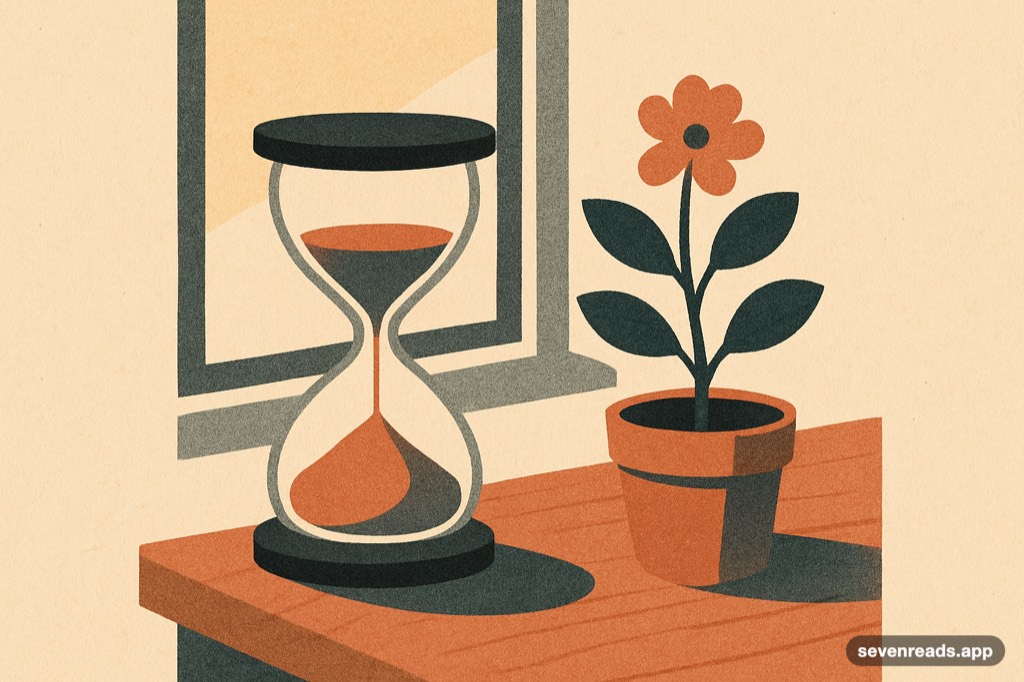
Memento mori is Latin for "remember that you will die," and it names both a fact and a practice: deliberately recalling your mortality so that the day in front of you gets priced correctly. Far from morbid, the tradition — Stoic, Roman, monastic, artistic — treats death-awareness as the sharpest available tool for cutting through pettiness, procrastination and misplaced fear. The reminder isn't that life is grim; it's that it's finite, and therefore that today isn't a rehearsal.
Here's where the phrase comes from, what the practice actually looks like in the sources, and the modern misreadings worth avoiding.
The sources — Marcus, Seneca, Epictetus — are free in Seven Reads — start reading today.
Get Seven ReadsThe Roman root and the whispering slave
The emblematic story: a Roman general at his triumph — the empire's highest honor — rode with a companion whose job included reminding him he was mortal, a check on the day's intoxication. Whatever the historical details, Rome institutionalized the insight: at the peak is exactly when you need the reminder, because that's when perspective fails. The skull on the scholar's desk, the vanitas painting, the monk's greeting — later centuries kept rebuilding the same alarm clock.
What the Stoics actually do with it
In Stoic practice the reminder is an instrument with specific uses. Marcus Aurelius deploys it against procrastination (act now — the opportunity is not indefinitely renewed), against anger (why spend a finite day on this?), and against status anxiety (fame's audience dies too). Seneca's letters use it to attack the great human accounting error: living as though time were the one unlimited resource, guarding money carefully while giving away hours to anyone who asks. Epictetus uses it to rank fears — most things we dread are smaller than we think once measured against the one certain loss. In every case the move is the same: death as the denominator that makes the day's numerator legible. Reading Meditations, you can watch the tool in daily use.
What it is not
Three misreadings flatten it. It's not nihilism — "nothing matters because we die" is the exact inversion; the practice claims things matter more under a deadline. It's not gothic decoration — the aesthetic (skulls, hourglasses) serves the practice and is inert without it. And it's not a license for recklessness — "you could die tomorrow, so buy the thing" borrows the phrase for impulse; the sources consistently use it for focus and de-escalation instead. The test of a real memento mori: it should make you kinder and more deliberate this afternoon, not more dramatic.
The practice, minimally
The traditional forms are small: a morning sentence (Marcus wrote himself several), an object on the desk, a question before disputes — "will this matter, measured against the whole?" Modern research on perspective-taking backs the mechanism: mortality salience, handled reflectively rather than anxiously, reliably reorders priorities toward relationships and meaning. Two thousand years of practitioners put it more simply: remembering the deadline is how you remember the assignment. The companion idea, amor fati, handles what the deadline can't change.
Frequently asked questions
What does memento mori literally mean?
Latin for "remember that you will die" — a reminder of mortality used as a practice: recalling the deadline so that time, anger and ambition get priced correctly today.
Is memento mori morbid or depressing?
The tradition claims the opposite: death-awareness as clarity. In the Stoic sources it consistently produces urgency about what matters and indifference to what doesn't — focus, not gloom. If a practice produces dread rather than priority, the sources would say it's being done wrong.
How do I practice memento mori?
Small and regular beats dramatic: a morning reminder sentence, an object that carries the meaning, or the measuring question before conflicts — "against the whole of a life, how big is this?" The sources themselves — Meditations especially — are the practice in book form.
Read the practice at its source.
Meditations and Seneca's letters are free in Seven Reads — start reading today.
Get Seven Reads