Books Like 1984: What to Read Next
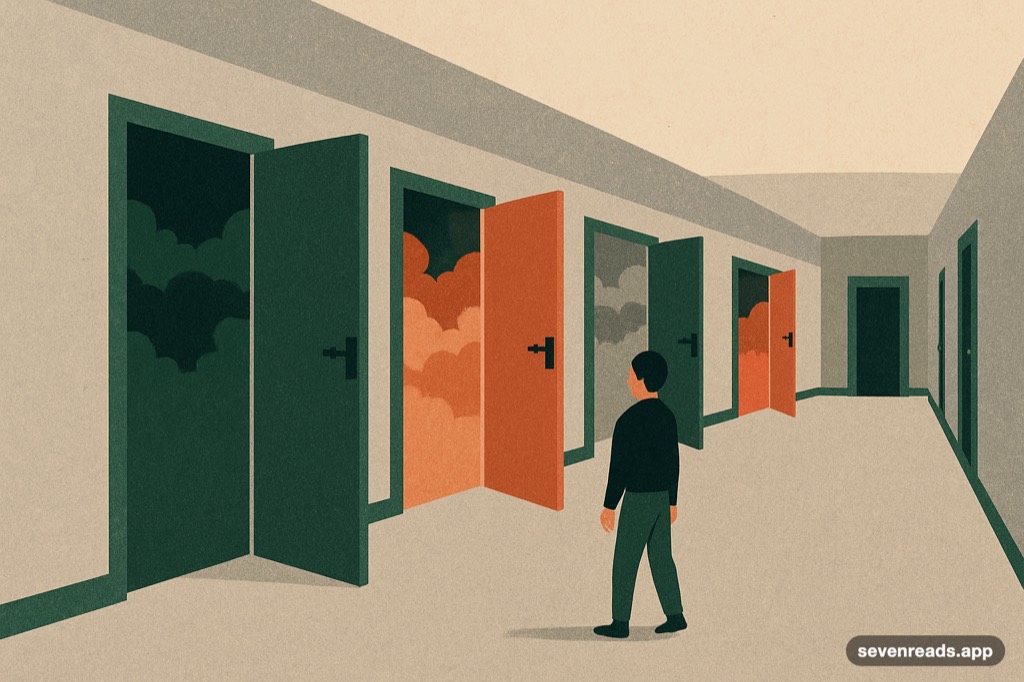
Nobody finishes 1984 satisfied — the book is engineered to leave a mark — and "what next" has a real answer once you name which part marked you: the machinery of control, the doomed love, the language-horror, or the trial. Here are the books that recast each part of the spell, from the Russian novel Orwell openly borrowed from (free to read) to the trial Kafka wrote before the century caught up with him (also free).
Sorted by what you're actually chasing.
Several of these are free in Seven Reads — start reading today.
Get Seven ReadsIf you want the source: We
Yevgeny Zamyatin's We (1924) is 1984's acknowledged ancestor — Orwell reviewed it, praised it, and wrote his book within years. A mathematician in the glass-walled One State, citizens as numbers, a seditious love affair, a surgical cure for imagination: the skeleton is startlingly familiar, but Zamyatin's telling is stranger — feverish, fragmented, closer to poetry. Banned in the USSR for sixty years, it's now public domain and the single most direct answer to "books like 1984," because it largely is the book 1984 is like. Pair with the genre's full map.
If you want the other prophecy: Brave New World
Huxley's 1932 masterpiece is 1984's official opposite: control by pleasure instead of pain — engineered castes, universal medication, entertainment as sedation, and nobody needing a Thought Police because nobody has an unauthorized thought left. The standing argument about which prophecy aged better (Postman: "Orwell feared the ban; Huxley feared no one would want to read") is best had after reading both, and the two books together form the genre's complete axis. Still in copyright; worth every penny.
If the trial was the horror: The Trial and Darkness at Noon
Kafka's The Trial (1925, free) is Room 101's grandfather: a man arrested without charge by a Court that is everywhere and answerable nowhere — the bureaucratic nightmare 1984 systematized, written before the systems existed. Koestler's Darkness at Noon (1940) is the historical hinge: an old Bolshevik interrogated by the revolution he built, and the century's deepest look at why the confessions were sincere — the psychology O'Brien's sessions run on, from an author who'd been in the cells. Between them they bracket Orwell's interrogation chapters: the absurdist before, the documentary after.
The deeper shelf
Jack London's The Iron Heel (1908, free) — an oligarchic takeover of America with footnotes from a future historian; Orwell essayed it admiringly, and its DNA is visible. Wells's When the Sleeper Wakes (1899, free) supplied the genre's corporate-nightmare city. Bradbury's Fahrenheit 451 (1953) carries the language-and-books thread — firemen burning libraries, memory as resistance. Atwood's The Handmaid's Tale (1985) is the great successor, a theocratic Airstrip One with 1984's same document-coda trick. And when you want the fable-sized version of the whole argument, Animal Farm remains its author's own best companion piece — the same betrayal, at petting-zoo scale, in ninety pages.
Frequently asked questions
What is the closest book to 1984?
Zamyatin's We (1924) — Orwell read and reviewed it before writing 1984, and the skeleton (numbered citizens, glass state, doomed affair, cure for imagination) is directly ancestral. It's public domain now.
Should I read Brave New World or 1984 first?
Either order works — they're opposite prophecies (control by pleasure versus control by pain) and the famous argument about which aged better requires both. Most readers report Huxley feels more contemporary, Orwell more urgent.
Which books like 1984 are free to read?
We, The Trial, The Iron Heel and When the Sleeper Wakes are all public domain — all included free in Seven Reads. Brave New World, Fahrenheit 451 and The Handmaid's Tale remain in copyright.
The whole bloodline, mapped.
We, The Trial and the genre's free ancestors are in Seven Reads — start reading today.
Get Seven Reads