Hedonism Meaning: The Pleasure Philosophy, Misunderstood
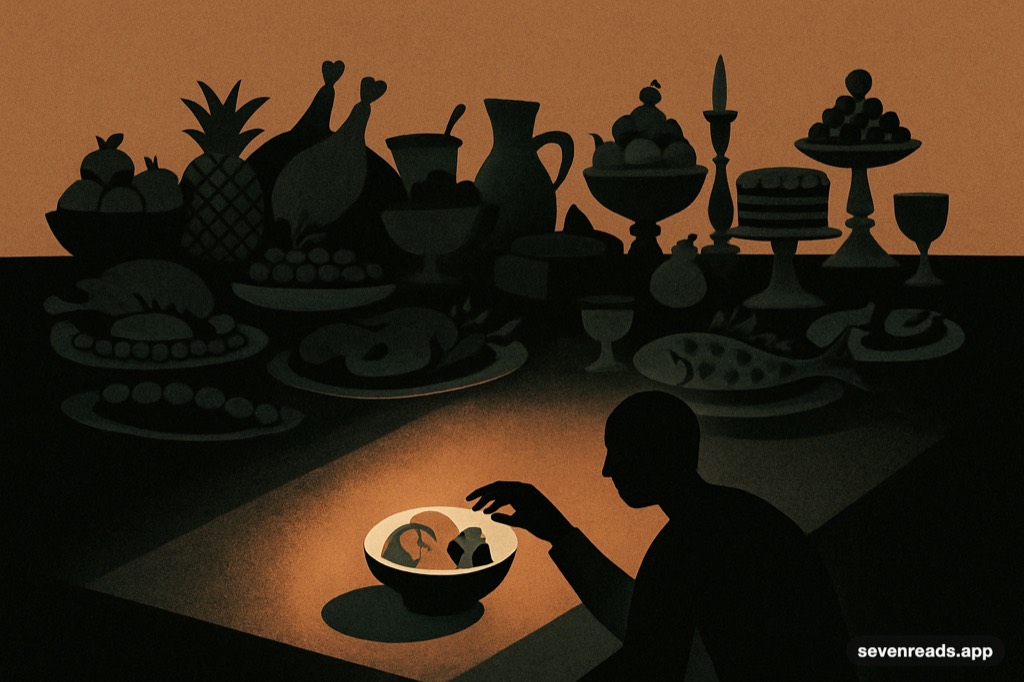
Hedonism — from Greek hēdonē, pleasure — is the doctrine that pleasure is the highest good and proper aim of life. The beach-resort connotation is real but recent; the philosophy is older, stranger, and mostly ascetic in practice. Its founding schools disagreed about everything except the premise: the Cyrenaics chased intense pleasures now, while Epicurus — history's most slandered hedonist — concluded that maximum pleasure is reached through bread, water, friendship and the absence of anxiety. And literature contributed the definitive stress test: a novel in which a young man tries the resort version at full commitment.
Here's the doctrine, its famous paradox, and the portrait that hangs over the whole subject.
The pleasure philosophers are free in Seven Reads — start reading today.
Get Seven ReadsTwo schools, one premise
Aristippus of Cyrene, a companion of Socrates, took the direct route: pleasure is good, present pleasure is surest, intensity beats duration — the philosophy of the excellent dinner. Epicurus, a century later, ran the same premise through arithmetic and got the opposite lifestyle: since pains outweigh pleasures of equal size, and anxiety is the greatest pain, the pleasure-maximizing life minimizes desire — simple food, withdrawn calm, friends above all, ataraxia as the summit. "Epicurean" as a synonym for gourmet luxury is history's revenge joke on a man who called bread and water the height of pleasure. The two schools mark hedonism's whole spectrum: pleasure as fire to feed, or as stillness to protect.
The paradox of hedonism
The doctrine's oldest problem is that pleasure flees direct pursuit. Aim at the pleasure of a party and you stand watching yourself not-having it; aim at the conversation and the pleasure arrives sideways. Philosophers from Sidgwick on have formalized it: pleasure is a byproduct of caring about things other than pleasure, so the strict hedonist's strategy defeats itself. Every school has a workaround — Epicurus redirects aim at tranquility; modern utilitarians aim at everyone's pleasure rather than their own — but the paradox stands as the doctrine's built-in critic: whatever the highest good is, it may be constitutionally unable to survive being aimed at.
The novel that runs the experiment
The Picture of Dorian Gray is hedonism's laboratory: Lord Henry supplies the creed ("Nothing can cure the soul but the senses"), Dorian commits to it absolutely, and the portrait in the attic keeps the books. Wilde's genius was making the doctrine's spokesman irresistible — every epigram lands — while the plot quietly itemizes the costs to everyone downstream of Dorian's pleasures. The novel doesn't refute hedonism by argument; it compounds the interest. Read alongside the Stoic-Epicurean debate, it completes the syllabus: pleasure as doctrine, pleasure as discipline, pleasure as portrait.
Using the word
Precision options: psychological hedonism claims we do pursue pleasure (a theory of motivation); ethical hedonism claims we should (a theory of value) — utilitarianism is ethical hedonism scaled to everyone. Casual usage ("hedonistic weekend") means Cyrenaic indulgence, and that's fine — just know that calling someone an epicure compliments their taste with a word whose owner would have offered you a glass of water, happily.
Frequently asked questions
What does hedonism mean in simple terms?
The view that pleasure is the highest good and the proper aim of life — from Greek hēdonē, pleasure. Philosophical hedonism ranges from indulgence (the Cyrenaics) to near-asceticism (Epicurus).
What is the paradox of hedonism?
Pleasure flees direct pursuit — it arrives as a byproduct of caring about other things. The strict pleasure-seeker's strategy defeats itself, which every hedonist school has had to engineer around.
Was Epicurus really a hedonist?
Yes — the most rigorous one: he reasoned that since anxiety is the greatest pain, maximum pleasure comes from simple food, friendship and tranquility. The "gourmet luxury" sense of epicurean inverts his actual practice.
Pleasure, audited by the classics.
Wilde, Epicurus and the Stoics are free in Seven Reads — start reading today.
Get Seven Reads